Evander Holyfield Net Worth: Career, Earnings, and Life Story
What Is Evander Holyfield’s Net Worth?
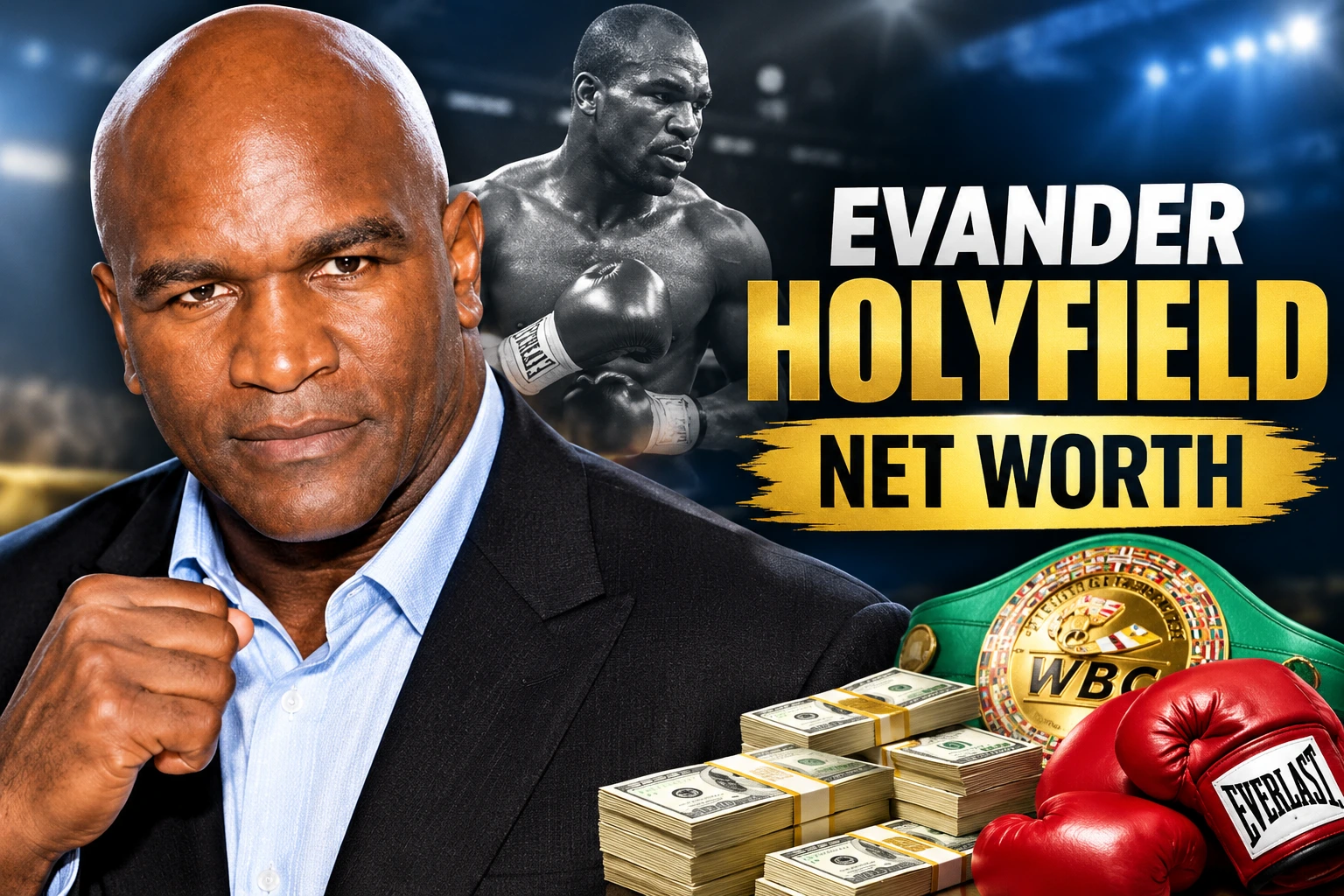
Evander Holyfield Net Worth is a retired American professional boxer widely recognized as one of the greatest heavyweight fighters in boxing history. Known for his determination, physical strength, and ability to compete against some of the toughest opponents of his era, Holyfield built a remarkable career that brought him international recognition and substantial earnings. His net worth is a popular topic because of his championship achievements, major boxing matches, and financial challenges after retirement.
Evander Holyfield Net Worth is difficult to determine precisely because his career earnings, business activities, property transactions, and financial obligations have changed over the years. Some online estimates place his wealth in the low millions, but these figures should be treated cautiously because a complete, independently verified account of his current assets and liabilities is not publicly available. His lifetime boxing earnings were significantly larger than what his present-day net worth estimates might suggest.
Holyfield’s financial story also demonstrates the difference between earning money and preserving wealth. Professional boxers can receive enormous purses for major fights, but taxes, management fees, training expenses, personal spending, and other financial responsibilities can reduce their actual earnings. Holyfield’s career remains an example of extraordinary sporting success accompanied by a complicated financial journey.
Evander Holyfield Earnings & Income Details
Evander Holyfield earned an estimated $230 million in career boxing income, according to published celebrity wealth estimates. His income primarily came from professional boxing matches, championship purses, and high-profile pay-per-view events. Additional earnings came from endorsements, business ventures, and public appearances. These figures represent reported estimates rather than audited financial records.
| Income Source | Estimated Earnings / Details |
|---|---|
| Total Career Boxing Earnings | Approximately $230 million reported |
| Fight Against George Foreman (1991) | Reported $20 million |
| Fight Against Larry Holmes (1992) | Reported $16 million |
| First Fight Against Mike Tyson (1996) | Reported $12 million |
| Rematch Against Mike Tyson (1997) | Reported $35 million |
| Endorsements and Sponsorships | Amount not publicly verified |
| Business Ventures | Earnings not publicly verified |
| Media Appearances and Exhibitions | Earnings vary; exact total unavailable |
Early Life and Childhood
Evander Holyfield was born on October 19, 1962, in Atmore, Alabama, United States. He grew up in a large family and later moved to Atlanta, Georgia, where he spent much of his childhood. His early environment helped shape his determination and competitive spirit, qualities that would become central to his boxing career.
Holyfield discovered boxing at a young age and began developing the skills required to compete at a serious level. Like many successful athletes, he had to balance his ambitions with the challenges of growing up and finding opportunities to improve. His dedication to training gradually helped him stand out among other young boxers.
By his teenage years, Holyfield had already demonstrated considerable potential in amateur boxing. His early experiences taught him discipline, patience, and the importance of preparation. These qualities became essential when he moved from amateur competition to the professional ranks and began pursuing a career at the highest level.
Amateur Boxing Career
Before becoming a professional boxer, Holyfield established himself as a promising amateur fighter. He competed in several tournaments and gained valuable experience against opponents with different fighting styles. These early competitions helped him improve his defensive techniques, punching combinations, and ability to remain composed under pressure.
One of the most important achievements of Holyfield’s amateur career came at the 1984 Summer Olympics in Los Angeles. He represented the United States in the light heavyweight division and won a bronze medal. Although he did not capture the gold medal, the Olympic experience helped introduce him to a wider audience and strengthened his reputation as a talented boxer.
His amateur success provided a strong foundation for his professional future. Olympic competition also gave him valuable exposure to international boxing and helped prepare him for the demands of fighting in front of large crowds. After the Olympics, Holyfield decided to pursue professional boxing, beginning a journey that would eventually make him a world champion in multiple weight divisions.
Professional Boxing Career
Evander Holyfield turned professional in 1984 and quickly began building an impressive record. His combination of speed, strength, endurance, and tactical awareness made him a difficult opponent. He initially competed in the cruiserweight division, where his performances established him as one of the sport’s leading fighters.
Holyfield won the undisputed cruiserweight championship in 1988 after defeating Carlos De León. This accomplishment was a major milestone because it demonstrated that he could dominate an entire weight division. His success also increased his marketability, creating opportunities for larger fights and better financial rewards.
After establishing himself at cruiserweight, Holyfield moved up to heavyweight. The transition required him to compete against naturally larger opponents, but he adapted through intense training and smart boxing. His willingness to face elite competition helped turn him into one of the most respected fighters of his generation and created the foundation for his biggest career earnings.
Heavyweight Championships and Major Victories
Holyfield became the undisputed heavyweight champion in 1990 after defeating James “Buster” Douglas. Douglas had famously defeated Mike Tyson earlier that year, making Evander Holyfield Net Worth victory especially significant. By winning the heavyweight titles, Holyfield confirmed that he could compete successfully at the highest level of professional boxing.
During the following years, Holyfield faced several major opponents, including George Foreman, Larry Holmes, and Riddick Bowe. His fights with Bowe became particularly memorable because they featured intense competition and demonstrated Holyfield’s determination against a physically imposing rival. These championship contests helped strengthen his reputation and increased public interest in his career.
Winning heavyweight titles brought Holyfield significant commercial opportunities. Championship fights often attract television audiences, sponsorship arrangements, and major promotional investments. Although the financial terms of every bout are not fully documented in one public record, his success during this period made him one of the most prominent and commercially valuable boxers of the 1990s.
Evander Holyfield vs. Mike Tyson
One of the most famous rivalries in boxing history was Holyfield’s series of fights against Mike Tyson. Their first meeting took place in November 1996, when Holyfield defeated Tyson by technical knockout in the eleventh round. Many observers had expected Tyson to win, making Holyfield’s victory a major sporting achievement.
The rematch occurred in June 1997 and became one of the most controversial fights in boxing history. During the bout, Tyson bit Holyfield’s ears, leading to his disqualification. The incident attracted worldwide attention and remains one of the most widely discussed moments in professional boxing.
The rivalry significantly increased public interest in both fighters. High-profile rematches can generate substantial revenue through ticket sales, pay-per-view purchases, sponsorships, and promotional agreements. Holyfield’s participation in these historic events contributed to his financial legacy, although the precise amount he ultimately retained from the fights is not publicly established.
How Did Evander Holyfield Make His Money?
Professional boxing was the primary source of Holyfield’s wealth. As a multiple-division world champion, he participated in major championship bouts that generated considerable commercial interest. His earnings came from fight purses and, depending on individual agreements, could also include a share of pay-per-view revenue and other promotional income.
Endorsements and commercial appearances also offered opportunities to earn money outside the ring. Successful athletes often receive compensation for promoting products, attending events, and participating in advertising campaigns. Holyfield’s international recognition and championship record made him a recognizable figure, although the total value of his endorsement income is not publicly verified.
Holyfield has also been associated with business ventures and entertainment appearances after his most active boxing years. Retired athletes sometimes earn money through speaking engagements, interviews, exhibitions, and media projects. These activities can provide additional income, but their financial contribution varies over time and should not be confused with confirmed current wealth.
Financial Challenges and Property Issues
Despite earning substantial sums during his boxing career, Holyfield later faced widely reported financial difficulties. Maintaining a large property, supporting family responsibilities, paying taxes, and meeting other expenses can create significant financial pressure, even for someone who once earned millions of dollars. His experiences attracted attention because they contrasted sharply with his success inside the ring.
Holyfield’s Georgia estate became a notable part of his financial story. Reports over the years described financial difficulties connected with the property, including mortgage-related problems and its eventual sale. Large homes can be expensive to maintain, particularly when ownership costs continue after an athlete’s highest-earning years have passed.
These challenges illustrate why career earnings do not automatically translate into lasting wealth. Financial obligations can continue long after an athlete retires, while income from competition may decline sharply. Holyfield’s financial history serves as a reminder of the importance of budgeting, professional financial advice, and long-term planning for athletes whose careers may have limited earning windows.
Personal Life and Family
Evander Holyfield has a large family and has spoken publicly about the importance of his children and personal responsibilities. Family life has been an important part of his identity outside boxing, although managing personal obligations alongside a demanding professional career can be challenging.
His career required extensive travel, strict training schedules, and long periods of preparation for major fights. These demands often placed pressure on personal relationships and daily routines. Like many professional athletes, Holyfield had to balance the expectations of his sporting career with responsibilities beyond the ring.
Despite the challenges he experienced, Holyfield remains closely associated with boxing and his achievements as a champion. His personal story includes success, setbacks, and lessons about life after professional sports. His legacy extends beyond his financial position because of the influence he had on boxing and the memorable contests he participated in.
Life After Retirement
As his career progressed, Holyfield gradually moved away from competing at the highest professional level. Retirement did not end his connection with boxing, however. He continued to appear in interviews, public events, and projects celebrating the sport’s history.
Holyfield’s experience has also made him a recognizable figure in discussions about athlete finances. His career illustrates the opportunities available to successful boxers and the difficulties that can arise when earnings are not carefully managed over time. His story is relevant to younger athletes who hope to turn sporting success into long-term financial security.
Today, Holyfield is remembered primarily for his championship achievements, his rivalry with Mike Tyson, and his determination against elite heavyweight opponents. Although estimates of his current net worth vary, his place in boxing history is far more firmly established than any single financial figure.
Conclusion
Evander Holyfield built an extraordinary boxing career, becoming a world champion at cruiserweight and heavyweight and competing against some of the most famous fighters of his era. His major victories and historic rivalry with Mike Tyson helped make him a global sporting figure and created opportunities for substantial career earnings.
However, his financial journey shows that even very successful athletes can experience serious money challenges after their peak earning years. His current net worth cannot be confirmed with complete accuracy from publicly available information, so online estimates should be viewed as approximations rather than verified financial statements.
Holyfield’s legacy ultimately rests on his achievements inside the ring. His Olympic medal, championship titles, memorable fights, and lasting influence on professional boxing continue to define his career, regardless of how much wealth he holds today.