Peter Max Net Worth : Career, Art Business, Earnings and Legacy
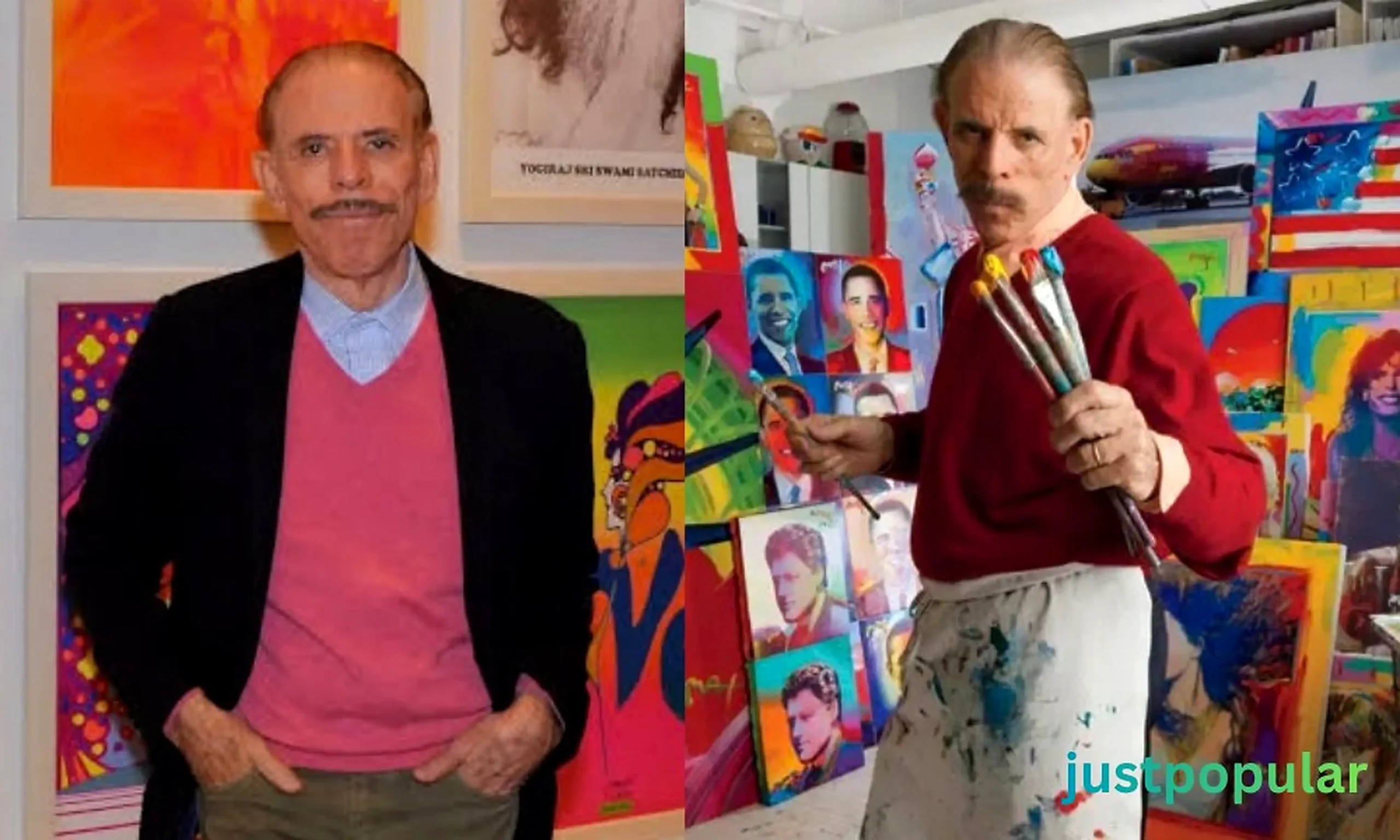
Peter Max Net Worth was one of the most recognizable artists of the 20th and early 21st centuries. Known for his colorful psychedelic paintings, cosmic imagery, bold typography, and instantly recognizable style, he turned art into a massive commercial business while remaining a major figure in American pop culture.
At the time of his death in September 2026 at age 88, Peter Max had an estimated net worth of $100 million, according to Celebrity Net Worth. His fortune was built over several decades through original artwork, prints, licensing agreements, commercial projects, product collaborations, and other business interests.
Max’s financial story is particularly interesting because he did not rely exclusively on traditional gallery sales. He understood early that an artist could build a much larger audience by putting artwork on everyday products, public projects, posters, clothing, transportation, and other commercial platforms.
Peter Max Net Worth
Peter Max’s estimated net worth was $100 million at the time of his death. That figure reflects the enormous commercial success of his artwork and business activities over a career spanning more than six decades.
Unlike many artists who generate most of their income from selling individual paintings, Max created a business around his entire artistic identity. His colorful images could be reproduced and licensed across many different products, allowing the same creative work to generate revenue through multiple channels.
His financial success also came from the continued popularity of his artwork. Original paintings, limited-edition prints, posters, and other pieces remained part of the collectibles and art market long after Max’s initial rise to fame.
Peter Max Early Life
Peter Max was born Peter Max Finkelstein on October 19, 1937, in Berlin, Germany. His family left Germany when he was a young child and eventually spent many years in Shanghai, China. Those early experiences exposed him to different cultures, artistic traditions, and visual influences.
Max developed an interest in astronomy during his childhood, and the subject remained an important influence throughout his career. Stars, planets, moons, suns, and cosmic landscapes later became recurring elements in his artwork. His official biography describes art and astronomy as two major passions that shaped his creative development.
The family eventually moved to the United States in 1953. Max settled in New York and studied at the Art Students League and the School of Visual Arts. His early training was rooted in realistic painting before he gradually moved toward more experimental and colorful styles.
How Peter Max Started His Career
Before becoming famous for psychedelic artwork, Max worked as a commercial artist and graphic designer. He collaborated with artist Tom Daly and became involved in book covers, advertising, album artwork, and other design projects.
One important early success came in 1962 when Max created artwork for a Riverside Records album featuring blues pianist Meade Lux Lewis. The illustration received a gold medal from the Society of Illustrators, helping establish Max as a serious professional illustrator.
Max’s early commercial experience turned out to be extremely valuable. Instead of seeing commercial work as separate from fine art, he eventually combined the two. That decision became one of the major reasons his artwork reached such a large audience.
By the middle of the 1960s, Max was moving away from traditional commercial assignments and developing the colorful visual style that would eventually make him famous.
The Rise of Peter Max’s Cosmic Style
Peter Max became closely associated with the cultural changes of the 1960s. His artwork featured bright colors, stars, flowers, rainbows, planets, faces, peace imagery, and surreal compositions.
His posters became especially popular among young people. They were affordable compared with original paintings and could be displayed in homes, dorm rooms, stores, and other spaces. This helped transform Max from a professional illustrator into a recognizable cultural personality.
His work became so closely connected with the era that his name was frequently associated with the colorful visual language of the late 1960s and early 1970s. The Washington Post has described how his imagery appeared on everything from posters and clothing to buses, coffee mugs, clocks, and airplanes.
This popularity was not simply artistic success. It also created a powerful commercial opportunity that would significantly increase Max’s earnings.
Peter Max Licensing Business
One of the biggest contributors to Peter Max’s wealth was licensing.
Rather than selling a painting once and moving on, Max allowed companies to use his artwork and recognizable visual identity on consumer products. His designs appeared on clothing, household items, posters, clocks, stationery, glassware, and many other products.
Celebrity Net Worth reports that his businesses had licensing agreements with more than 70 companies during the height of his early commercial success.
This business model gave Max something many artists never achieve: the ability to earn money from the same artistic identity through multiple commercial channels.
His philosophy also helped him connect with ordinary consumers. People who could never afford an original painting could still own a Peter Max poster, print, product, or licensed item. That broad accessibility helped turn his name into a recognizable brand.
Peter Max Art and Major Commercial Projects
Max’s artwork eventually moved far beyond posters and consumer products. He worked on major public and commercial projects involving transportation, sporting events, music, and American cultural landmarks.
His work was associated with the 1994 FIFA World Cup in the United States, and he also created artwork connected with Woodstock ’99. He painted a Boeing 777 for Continental Airlines and worked on cruise-ship artwork as well.
His relationship with major American institutions also expanded his reputation. He famously painted Statue of Liberty images and was invited to the White House during Ronald Reagan’s presidency. The Washington Post reports that Max created six Statue of Liberty paintings at the White House in 1981.
These projects demonstrated that Max’s artwork could function on an enormous scale. His style was recognizable whether it appeared on a small print or a massive public surface.
Peter Max Art Sales and Earnings
Peter Max’s earnings came from several different sources, making his financial situation more complicated than that of a conventional painter.
Original paintings could sell for substantial amounts, while prints and limited editions created a broader market. His official studio continues to offer fine art, vintage works, graphics, posters, and other pieces, with some current listed works priced from hundreds to several thousand dollars.
The secondary art market also shows continued interest in his work. Auction listings include Peter Max prints, serigraphs, mixed-media works, paintings, and sculptures, with prices varying widely depending on the piece, condition, provenance, rarity, and buyer demand.
One particularly notable aspect of Max’s business was the scale of his studio operation. Celebrity Net Worth reports that his studio generated more than $30 million in profit in 2018.
That figure helps illustrate why Peter Max’s wealth was considerably larger than what might be expected from an artist who simply sold paintings through galleries.
Peter Max Business and Estate
In the later part of his career, Max’s business became increasingly complicated. His company, ALP Inc., was involved in the production, marketing, licensing, and commercialization of his artwork.
Court proceedings later brought attention to the enormous amount of artwork and intellectual property associated with the business. Celebrity Net Worth reported that one disputed proposal involved approximately 1,000 one-of-a-kind artworks alleged to be worth more than $70 million, along with intellectual-property rights and other inventory.
This illustrates an important point about calculating an artist’s net worth. A large portion of an artist’s wealth may not sit in a bank account. It can exist in paintings, copyrights, trademarks, licensing rights, company ownership, collectibles, real estate, and other assets.
For someone like Peter Max, assigning an exact value to everything connected with his name was therefore difficult.
Peter Max’s Later Years
During his later years, Max’s personal and business affairs became the subject of extensive legal disputes. His health deteriorated and he developed dementia, eventually becoming less involved in the daily management of his art business.
Family members and other parties became involved in disagreements concerning his care, artwork, business interests, and financial affairs. The disputes generated significant legal proceedings and competing claims about the management of his assets.
These circumstances are important when discussing his final net worth because the value associated with an artist’s estate can be different from a simple personal bank balance. Ownership, legal claims, intellectual property, artwork inventories, and business interests can all affect the eventual value of an estate.
Peter Max Personal Life
Peter Max was married twice and had two children, Adam and Libra.
His first marriage was to Elizabeth Ann Nance, and the couple had two children. Max later married Mary Balkin, who became involved in his later personal life during the years when his health and business affairs became increasingly complicated.
Max was known for a lifestyle that differed in some respects from the stereotypical image of a psychedelic-era artist. His official biography emphasizes his long-standing interest in astronomy, art, meditation, nature, and spirituality.
His personal philosophy was closely connected to the optimistic imagery he produced. Rather than focusing heavily on dark or pessimistic themes, his work often emphasized color, happiness, peace, nature, and the universe.
Peter Max Death and Legacy
Peter Max died in September 2026 at the age of 88. His death marked the end of a career that had connected fine art, graphic design, popular culture, and mass-market business in an unusual way.
His legacy is larger than the estimated $100 million attached to his name. Max changed the way many people viewed the relationship between art and commerce. He demonstrated that an artist could build a recognizable visual brand without limiting the work to traditional galleries.
His images became part of American popular culture through posters, products, public projects, transportation, sporting events, and other commercial ventures. His official studio continues to represent his artwork and maintain collections connected to his career.
For collectors, Peter Max’s work also remains active in the art market. Auction records show thousands of listed or sold works, ranging from relatively affordable prints to more valuable original and mixed-media pieces.
Ultimately, Peter Max’s financial success came from combining artistic recognition with an unusually effective commercial strategy. His ability to turn a distinctive artistic style into a worldwide brand was a major part of the fortune associated with his name.
Google E-E-A-T
| E-E-A-T Factor | Information |
|---|---|
| Experience | Peter Max spent more than six decades working as an artist, illustrator, designer, and commercial creative. |
| Expertise | He received formal art training at the Art Students League and School of Visual Arts and developed a highly recognizable artistic style. |
| Authoritativeness | His work appeared in major cultural, commercial, sporting, and public projects and became internationally recognized. |
| Trustworthiness | Net-worth figures are estimates rather than audited personal financial statements. The $100 million figure is the estimate reported by Celebrity Net Worth. |
| Primary Sources | Peter Max Studio’s official biography provides background information about his life, education, career, and artistic development. |
| Financial Context | His wealth came from artwork, licensing, commercial projects, business interests, and intellectual property rather than from a single income source. |
Earnings & Financial Data
| Financial Category | Estimated / Reported Information |
|---|---|
| Estimated Net Worth at Death | $100 million |
| Reported Studio Profit in 2018 | More than $30 million |
| Licensing Relationships | More than 70 companies reported during his major commercial period |
| Major Revenue Sources | Original art, prints, licensing, commercial artwork, products, and intellectual property |
| Art Market | Prices vary significantly by medium, edition, condition, rarity, and provenance |
| Estate Assets | Included artwork, business interests, inventory, and intellectual-property rights |
| Net Worth Status | Estimate rather than an independently audited figure |
Final Thoughts on Peter Max Net Worth
Peter Max built his fortune by doing something few artists have managed on the same scale: he turned a unique artistic style into a worldwide commercial identity.
His estimated $100 million net worth reflects decades of painting, illustration, licensing, commercial partnerships, product sales, and business activity.
But the most interesting part of Peter Max’s financial story is not simply the final number. It is the business model behind it. He understood that art could reach millions of people when it moved beyond galleries and into everyday life.
From posters and clocks to airplanes, cruise ships, sporting events, and public projects, Peter Max made his artwork recognizable across generations. His career showed how creativity, branding, licensing, and entrepreneurship could work together to create a lasting artistic business.
Even after his death, his artwork continues to circulate through galleries, auctions, collections, and the official Peter Max Studio. His colorful visual language remains one of the most recognizable artistic signatures associated with the cultural history of the 1960s and beyond.