Bill Rasmussen Net Worth: How Much Was the ESPN Founder Worth?
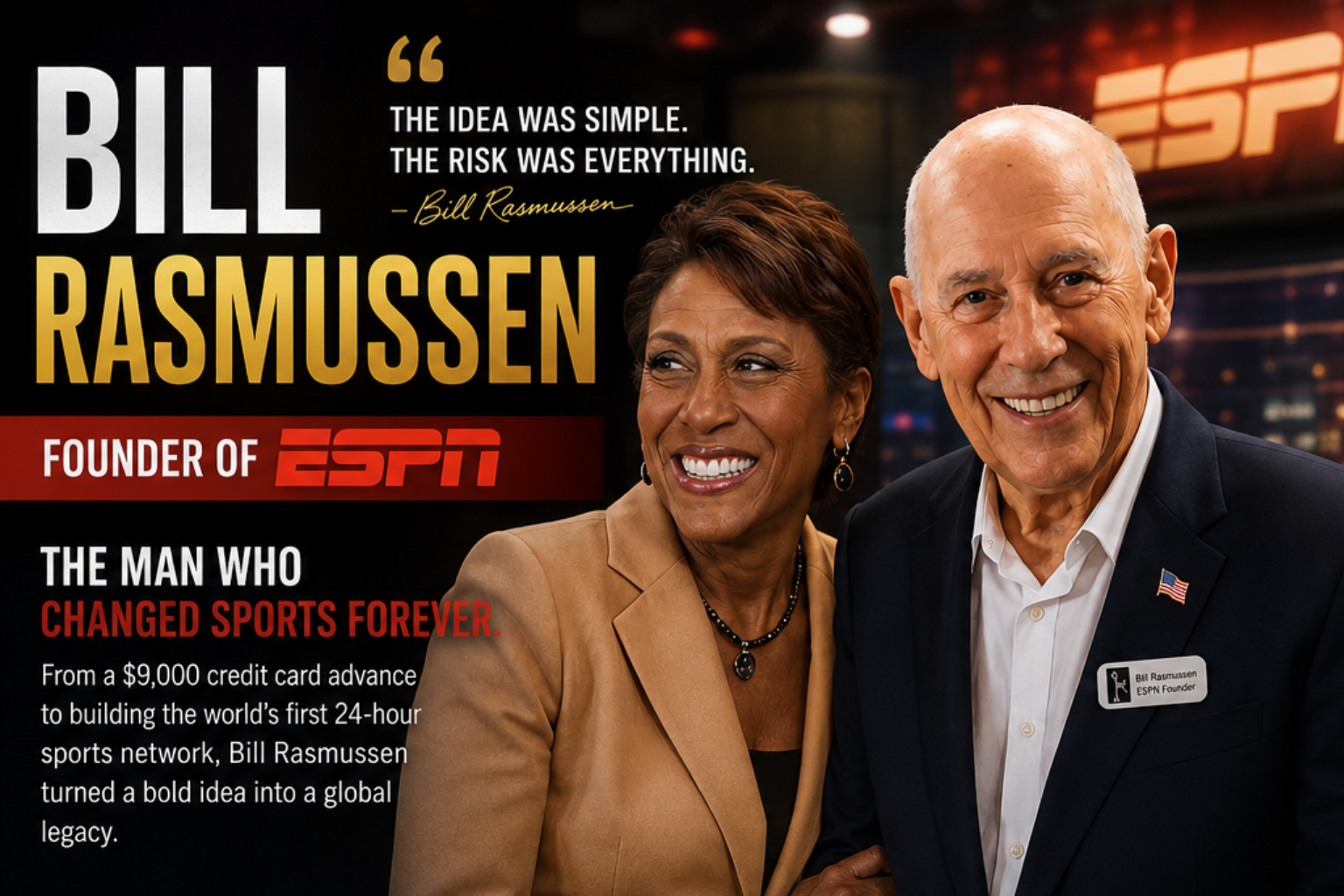
Bill Rasmussen net worth is a topic that naturally attracts attention because Rasmussen was the visionary behind one of the most influential sports media companies in history: ESPN. Unlike many modern celebrities whose wealth comes from salaries, endorsements, or social media businesses, Rasmussen’s financial story was built around entrepreneurship, media ownership, and an early investment in the idea of 24-hour sports television.
Rasmussen and his son Scott came up with the concept that eventually became ESPN in 1978. The network officially launched on September 7, 1979, and changed sports broadcasting forever. However, Rasmussen did not remain in control of ESPN for very long. Getty Oil became the company’s major financial backer and acquired a controlling interest, while Rasmussen eventually left the company.
There is no universally verified public figure for Rasmussen’s lifetime net worth. That means websites claiming a precise number should be treated carefully. However, historical information about his ownership of ESPN, the company’s later sale, and his business activities gives us useful clues about the financial value he created.
Bill Rasmussen Net Worth at a Glance
| Category | Details |
|---|---|
| Full Name | Bill Rasmussen |
| Known For | Co-founding ESPN |
| Profession | Entrepreneur, broadcaster, sports executive |
| Born | 1932 |
| ESPN Founded | 1978 |
| ESPN Launched | September 7, 1979 |
| Education | DePauw University, Rutgers University |
| Major Business | ESPN |
| Major Investor | Getty Oil |
| Estimated Net Worth | Not officially verified |
| Major Wealth Event | Sale of his remaining ESPN interest |
| Known For | Creating the idea for a 24-hour sports network |
The most important point is that Bill Rasmussen net worth cannot be confirmed with a single official figure. His financial history is much more complicated than simply looking at a salary or a publicly traded stock portfolio.
Who Was Bill Rasmussen?
Bill Rasmussen was an American entrepreneur and sports broadcaster who became famous for creating ESPN. Before ESPN, he worked in advertising, radio, television, sports broadcasting, and professional hockey. His background gave him a combination of business knowledge and sports-media experience that eventually helped him recognize an opportunity others overlooked.
Rasmussen earned a bachelor’s degree in economics from DePauw University in 1954 and later earned an MBA from Rutgers University in 1960. After serving in the U.S. Air Force, he worked in sales and marketing before moving toward broadcasting.
His broadcasting career included work at WTTT radio in Massachusetts and WWLP-TV, where he served as sports director and later held other newsroom responsibilities. His experiences in local sports broadcasting helped him recognize a major problem: there was far more sports information available than traditional television stations had time to broadcast.
That observation eventually became the foundation of ESPN.
How Did Bill Rasmussen Create ESPN?
The idea for ESPN developed in 1978 after Rasmussen lost his job with the New England Whalers. During this period, he began discussing the possibility of creating a television network dedicated entirely to sports. His son Scott became an important part of the project, and together they pursued what initially looked like an extremely risky idea.
At the time, the concept of a television network devoted to sports around the clock seemed unrealistic. Cable television was still developing, satellite technology was relatively new, and many industry executives did not believe viewers would watch sports programming continuously.
Rasmussen and Scott nevertheless continued working on the idea. According to Rasmussen’s own account, he used a $9,000 credit-card advance to help get the project moving. That relatively small amount of personal financing was eventually followed by much larger outside investment.
Getty Oil eventually became the crucial financial backer. Historical accounts report that Getty invested about $10 million and obtained approximately 85% of ESPN. That investment helped provide the capital needed to turn the idea into a functioning television network.
ESPN’s Launch Changed Bill Rasmussen’s Financial Story
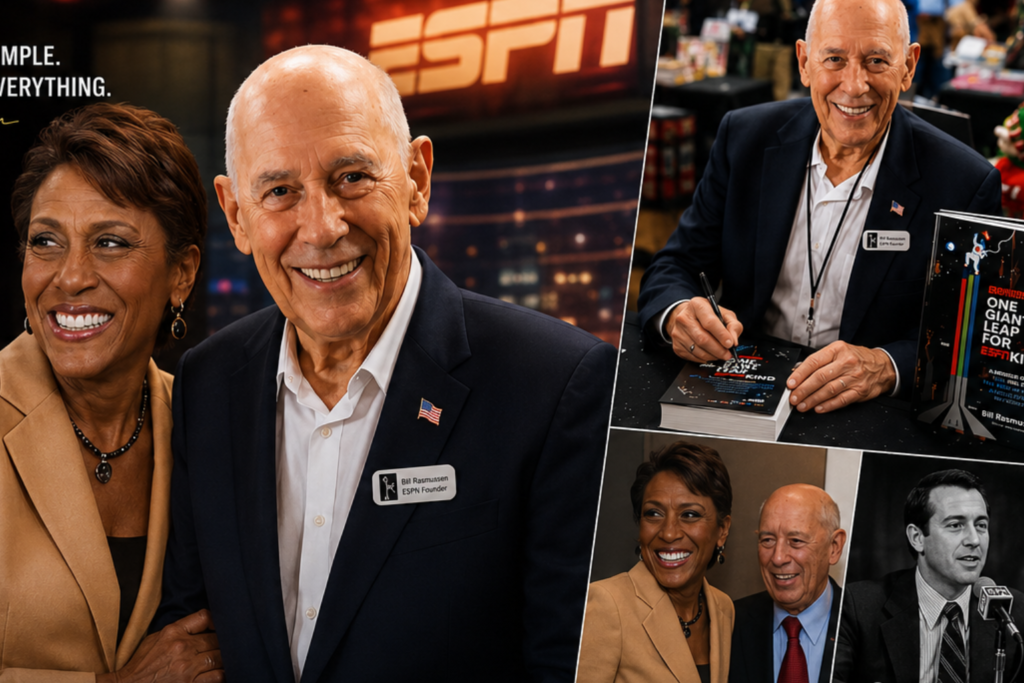
ESPN went on the air at 7 p.m. on September 7, 1979. It became the world’s first 24-hour sports television network, and its launch represented a major turning point in sports media.
The early network was far from the massive media business people know today. It had to convince cable operators, advertisers, sports organizations, and viewers that a sports-only channel could survive.
One of the early breakthroughs was securing NCAA programming rights. Another was an advertising agreement with Anheuser-Busch that was reportedly worth $1.4 million, which was a record-setting cable television advertising contract at the time.
The network’s growth ultimately demonstrated that Rasmussen’s original concept was much more valuable than many people initially believed.
This is one of the most important factors when discussing Bill Rasmussen net worth. His wealth was not simply generated by working as an ESPN executive. It was connected to his role as an original founder and owner of the business before ESPN became a major media property.
Bill Rasmussen’s ESPN Ownership and Wealth
One of the biggest questions surrounding Rasmussen’s fortune is how much money he actually made from ESPN.
Historical reports provide an important piece of the puzzle. Getty Oil acquired 85% of ESPN, leaving the remaining ownership divided among the other shareholders. Another historical account reported that the Rasmussen family still held approximately 12% of the company when Rasmussen left ESPN, and that this interest was sold in 1984 when ABC acquired the network.
ABC reportedly purchased ESPN for approximately $237.5 million in 1984. If the reported 12% family ownership figure is used simply as a historical calculation, 12% of $237.5 million would equal about $28.5 million.
However, this should not automatically be described as Bill Rasmussen personally receiving $28.5 million. The reported 12% was family ownership, and there could have been multiple shareholders, transaction terms, taxes, liabilities, and other financial considerations.
Still, the figure demonstrates why Rasmussen’s ESPN connection could have had substantial financial value.
Earnings & Financial Data
| Financial Detail | Historical Figure / Information |
|---|---|
| Initial personal financing | About $9,000 credit-card advance |
| Getty Oil investment | About $10 million |
| Getty ownership | Approximately 85% |
| Anheuser-Busch advertising deal | About $1.4 million |
| ABC purchase of ESPN in 1984 | Approximately $237.5 million |
| Reported Rasmussen family ownership before sale | About 12% |
| Simple 12% calculation on $237.5M | Approximately $28.5 million |
| Verified personal annual salary | Not publicly established |
| Official lifetime net worth | Not publicly verified |
The numbers above should be viewed as historical financial information rather than proof of a specific personal net worth. In particular, the approximately $28.5 million figure is a mathematical calculation based on reported family ownership and the reported ESPN transaction value. It does not establish Rasmussen’s personal proceeds or his total lifetime wealth.
What Happened to Bill Rasmussen After ESPN?
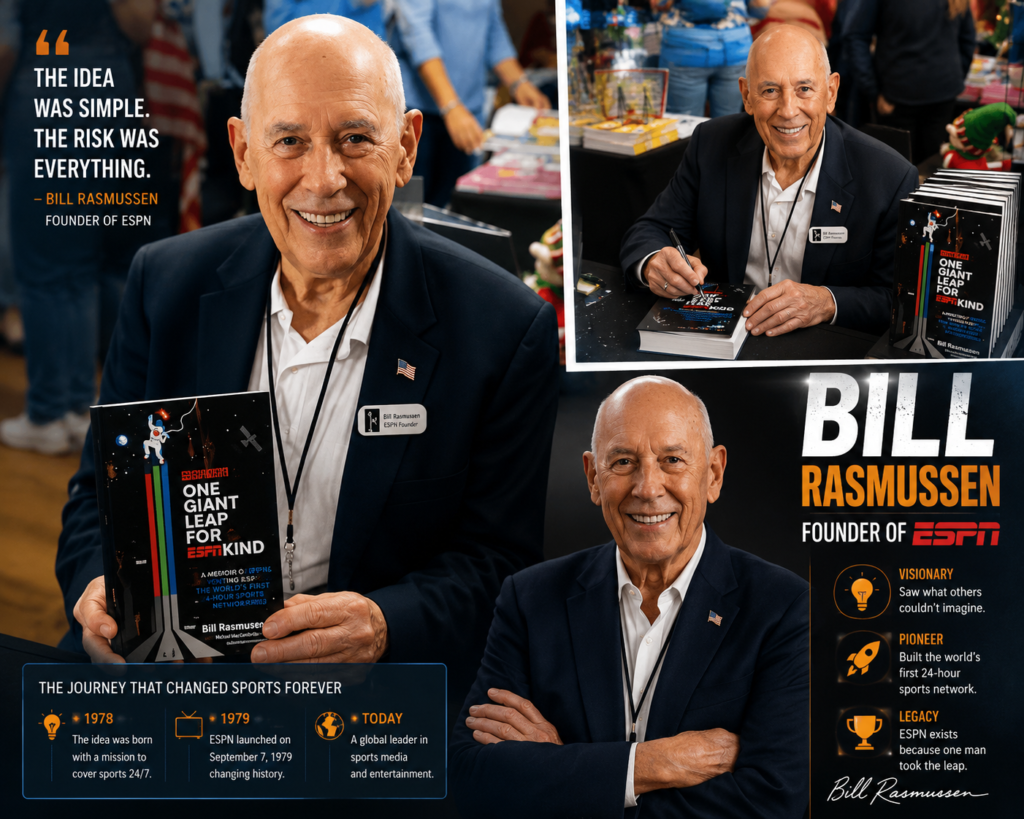
Rasmussen’s relationship with ESPN became complicated after the network received major outside investment. Although he was the person who originally conceived the idea, control of the company shifted as investors became involved.
He eventually left ESPN in September 1980. This means he did not remain at the company throughout the decades of explosive growth that followed.
That distinction is important. ESPN eventually became a global sports-media giant, but Rasmussen did not personally own the company throughout that entire journey. His financial opportunity came primarily from the early ownership and subsequent transactions rather than decades of executive compensation.
After ESPN, Rasmussen remained active in business, media consulting, sports, and entrepreneurship. His official biography notes that he worked with organizations including the Big Ten and several media and internet startups. He also founded or led ventures connected with online sports and college sports.
Bill Rasmussen’s Other Sources of Income
Although ESPN was undoubtedly the defining business chapter of Rasmussen’s career, it was not the only source of his professional income.
Before and after ESPN, Rasmussen was involved in advertising and consulting. His early advertising business began after he completed his MBA, and his official biography states that the company continued operating for decades.
He also became a public speaker and regularly shared his entrepreneurial experiences with universities, business organizations, and other groups. His story became particularly useful as an example of how a seemingly unrealistic idea can become a major business.
Books were another part of his post-ESPN career. Rasmussen wrote about the creation of ESPN and the lessons he learned from the experience, allowing his story to reach readers interested in entrepreneurship and sports media.
Bill Rasmussen’s Business Philosophy
One reason Rasmussen’s story remains interesting is that he did not begin with a massive corporation or unlimited funding. He started with an idea and had to convince other people that the idea was worth supporting.
His biggest advantage was his understanding of sports broadcasting. Traditional local television could only devote a limited amount of time to sports, while Rasmussen believed there was enough sports content to support a dedicated network.
That insight was extremely important.
The success of ESPN eventually proved that sports fans were willing to watch much more sports coverage than traditional television schedules allowed. The network could fill programming hours with college sports, professional sports, highlights, news, analysis, and eventually original programming.
In that sense, Rasmussen’s biggest financial asset was not simply money. It was his ability to identify an underserved market before the market became obvious to everyone else.
Bill Rasmussen Net Worth: What Is the Best Estimate?
So, how much was Bill Rasmussen actually worth?
The safest answer is that there is no reliably documented official figure for his personal net worth. Public sources provide information about ESPN’s financing, ownership, transactions, and Rasmussen’s business career, but they do not provide a verified personal balance sheet.
Some online sources may publish a precise net-worth number, but without documentation showing his assets, investments, liabilities, property holdings, taxes, and actual proceeds from business transactions, those figures should be considered estimates rather than established facts.
The historical ESPN ownership information does, however, suggest that Rasmussen’s financial position could have been substantial. The reported Rasmussen family interest and the later sale of ESPN provide evidence that his entrepreneurial work created significant financial value.
Bill Rasmussen’s Legacy
Rasmussen’s greatest legacy is arguably larger than any net-worth estimate.
Before ESPN, sports coverage was largely limited by the schedules of television networks and local stations. Rasmussen imagined something completely different: a network where sports could be available continuously.
ESPN launched that concept in 1979 and eventually became one of the most recognizable names in sports broadcasting. The network helped make sports highlights, analysis, live events, college sports, and sports news available on a much larger scale.
Rasmussen’s own official biography describes his contributions as including the creation of ESPN and SportsCenter, as well as extensive college sports coverage.
His influence was also recognized by the sports industry. In 2025, Rasmussen was inducted into the Sports Broadcasting Hall of Fame, another indication of the long-term impact of his work.
Google E-E-A-T Table
| E-E-A-T Factor | How This Article Addresses It |
|---|---|
| Experience | Focuses on Rasmussen’s real entrepreneurial and broadcasting history |
| Expertise | Uses historical information about ESPN’s founding, ownership, and transactions |
| Authoritativeness | References ESPN, Rasmussen’s official biography, Rutgers, Forbes, AP, and historical reporting |
| Trustworthiness | Clearly separates documented facts from estimates and calculations |
| Accuracy | Avoids presenting an unverified net-worth figure as a confirmed fact |
Why Bill Rasmussen’s Story Still Matters
The story of Bill Rasmussen is ultimately a story about taking a risk before the market was ready for it.
He did not create ESPN with billions of dollars behind him. He began with broadcasting experience, a business education, a love of sports, and an idea that many people considered unrealistic. The project eventually attracted major investment and became one of the most recognizable sports-media brands in the world.
His financial journey also shows why founder wealth can be difficult to calculate. Owning part of a startup at one stage does not mean owning the same percentage later. Investors can receive controlling stakes, founders can leave companies, and shares can be sold through later transactions.
For that reason, the most responsible answer to the question “What was Bill Rasmussen’s net worth?” is not an unsupported number. Instead, the available evidence shows that his ESPN ownership and later business activities created meaningful wealth, while his exact personal net worth remains publicly unverified.
Final Thoughts on Bill Rasmussen Net Worth
Bill Rasmussen’s name is permanently connected with ESPN, and his financial story is closely tied to the extraordinary business value created by the network he helped launch.
The available historical records show a remarkable journey: a $9,000 personal financing effort, a risky sports-network concept, major Getty Oil investment, ESPN’s 1979 launch, and the eventual sale of the network to ABC for hundreds of millions of dollars.
While an exact Bill Rasmussen net worth figure cannot be confirmed from reliable public records, his reported ownership position in ESPN and his later business activities indicate that he achieved considerable financial success.
More importantly, Rasmussen’s legacy is not measured only in dollars. He helped create the idea of a dedicated, around-the-clock sports network at a time when many industry professionals doubted it could work. That idea became ESPN—and ultimately changed the way millions of people consume sports.
Frequently Asked Questions
What was Bill Rasmussen’s net worth?
Bill Rasmussen’s exact personal net worth has not been reliably verified through authoritative public financial records. Historical ESPN ownership and transaction information indicates that his business interests had significant value, but a precise personal figure should be treated as an estimate.
How did Bill Rasmussen make his money?
Rasmussen’s wealth was primarily connected to entrepreneurship, broadcasting, advertising, consulting, and most importantly his role as a founder and early owner of ESPN.
Did Bill Rasmussen own ESPN?
Yes. Rasmussen was a founder of ESPN and held an ownership interest during its early years. Getty Oil later became the controlling investor, and Rasmussen eventually left the company.
How much did Getty Oil invest in ESPN?
Historical sources report that Getty Oil invested approximately $10 million in ESPN and acquired about 85% of the company.
How much was ESPN sold for in 1984?
ABC reportedly acquired ESPN for approximately $237.5 million in 1984.
Did Bill Rasmussen become a billionaire from ESPN?
There is no credible evidence that Rasmussen became a billionaire from ESPN. His reported ownership and the historical sale value suggest significant wealth creation, but they do not support a billionaire-level personal fortune.
When did Bill Rasmussen start ESPN?
Rasmussen and his son Scott developed the concept in 1978, and ESPN officially launched on September 7, 1979.
What was Bill Rasmussen famous for?
He was best known for co-founding ESPN and helping create the world’s first 24-hour sports television network.
What happened to Bill Rasmussen after ESPN?
After leaving ESPN, Rasmussen remained active in consulting, entrepreneurship, sports media, speaking engagements, and other business ventures.
What is Bill Rasmussen’s biggest achievement?
His biggest achievement was turning the idea of a dedicated sports television network into ESPN, a company that fundamentally transformed sports broadcasting.