Mario Lemieux Net Worth: Career Earnings, Penguins Ownership, Lifestyle & Financial Success
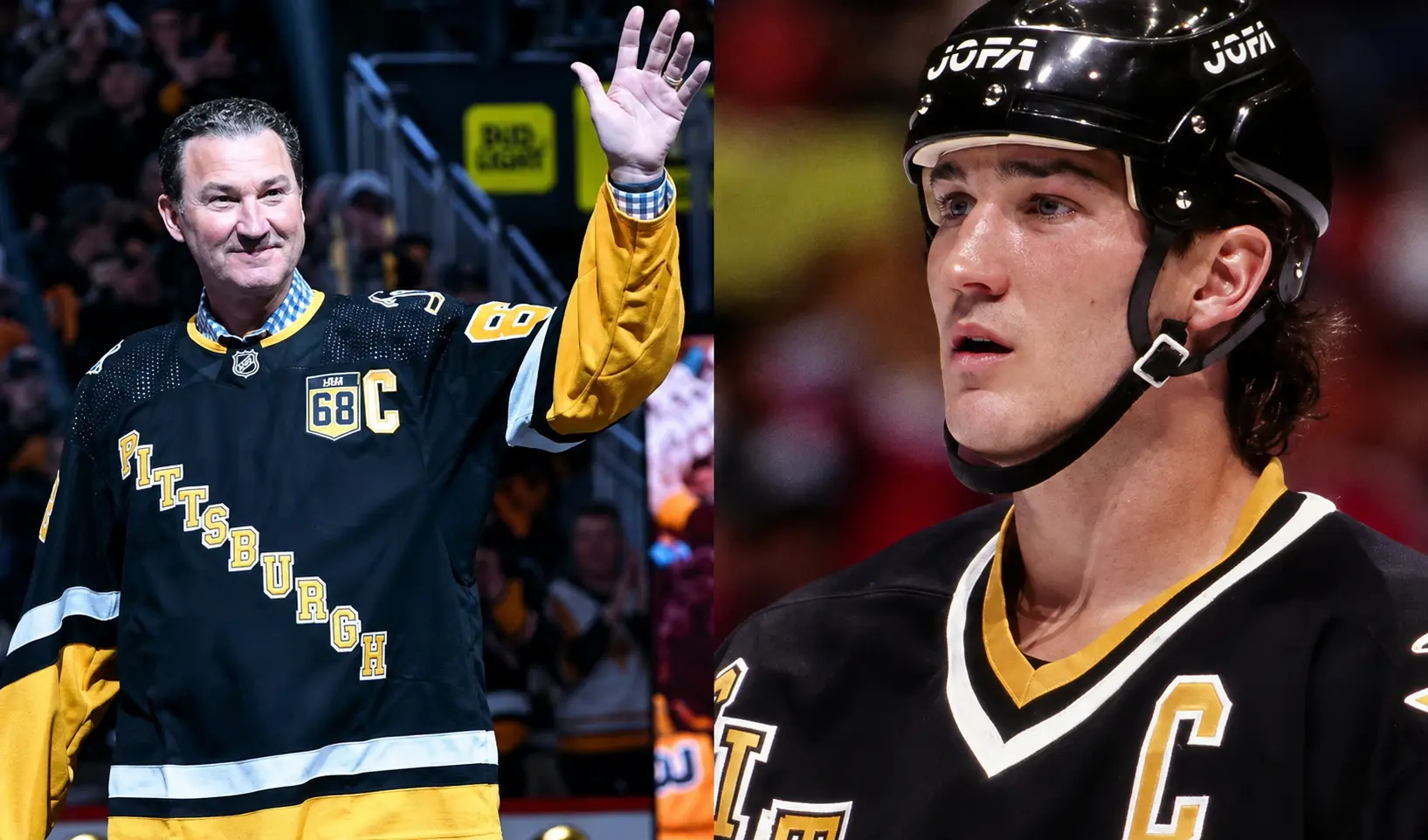
Mario Lemieux is one of those rare athletes whose legacy goes far beyond what he accomplished on the ice. Known by nicknames such as “Super Mario” and “Le Magnifique,” Lemieux became one of the most dominant hockey players of his generation while spending his entire NHL playing career with the Pittsburgh Penguins. Today, Mario Lemieux’s net worth is estimated at around $300 million, according to Celebrity Net Worth, although exact personal wealth is difficult to verify because much of his fortune has been connected to private investments and his ownership of the Penguins.
What makes Lemieux’s financial story particularly interesting is that his biggest wealth-building move did not come from a massive endorsement deal or a long list of NHL contracts. Instead, it came from a risky business decision during one of the darkest periods in Pittsburgh Penguins history. In 1999, Lemieux converted millions of dollars in deferred salary into an ownership stake in the financially troubled franchise.
That decision ultimately turned a difficult situation into one of the most impressive athlete-to-owner success stories in professional sports. His playing career generated substantial income, but his investment in the Penguins created the foundation for the majority of his long-term wealth.
Mario Lemieux Net Worth at a Glance
Mario Lemieux’s estimated net worth is approximately $300 million. The figure commonly reported by Celebrity Net Worth reflects his long-term earnings from professional hockey, business interests, investments, and particularly his ownership position in the Pittsburgh Penguins.
Lemieux’s NHL playing career alone generated tens of millions of dollars. Salary-history records place his career NHL earnings at roughly $58.5 million, although different databases can produce different totals depending on whether deferred compensation, bonuses, and other payments are included.
The bigger story, however, is what happened after his playing career. Lemieux helped rescue the Penguins from bankruptcy in 1999 and became an owner. The franchise subsequently became dramatically more valuable, turning his original investment into an extraordinarily successful long-term financial decision.
Early Life and the Road to the NHL
Mario Lemieux was born on October 5, 1965, in Montreal, Quebec, Canada. Hockey became part of his life at a very young age, and he developed his skills alongside his brothers. His talent quickly became obvious, and before long he was considered one of the most promising young hockey players in Canada.
Lemieux entered the NHL in 1984 after being selected first overall by the Pittsburgh Penguins. The selection came at an important time for the franchise, which desperately needed a superstar capable of changing its fortunes. Lemieux immediately showed that he could be that player.
His rookie season was spectacular. He finished with 100 points despite missing several games and won the Calder Memorial Trophy as the NHL’s top rookie. His combination of size, speed, creativity, and scoring ability made him a unique player, and his value to Pittsburgh became apparent almost immediately.
Mario Lemieux’s Legendary NHL Career
Lemieux spent his entire NHL playing career with the Pittsburgh Penguins. Over 17 seasons, he established himself as one of the most productive players in league history. The Penguins Hall of Fame credits him with six Art Ross Trophies, three Hart Trophies, and two Conn Smythe Trophies.
One of the most remarkable seasons of his career came in 1988-89, when Lemieux recorded 199 points. That remains one of the most impressive offensive seasons in NHL history. He regularly surpassed 100 points and became the player most often viewed as the closest challenger to Wayne Gretzky during the height of Gretzky’s dominance.
Lemieux also helped Pittsburgh win back-to-back Stanley Cup championships in 1991 and 1992. His accomplishments were even more impressive because his career was interrupted by serious health and back problems. He retired in 1997, returned to hockey in 2000, and eventually retired for good in 2006.
Mario Lemieux Career Earnings
During his playing career, Lemieux earned substantial NHL salaries, especially during the later stages of his career. Salary records show several seasons in which he earned more than $5 million, while his final NHL season in 2005-06 paid him $3 million.
His career salary history is unusual because a significant amount of compensation was deferred. By the late 1990s, the Penguins reportedly owed Lemieux more than $32 million in deferred salary and related compensation. When the franchise entered financial trouble, this unpaid money became a major part of the story surrounding his transition from player to owner.
Different sources report slightly different career-earnings totals. HockeyZonePlus lists approximately $58.5 million in NHL career earnings, while other historical salary records list lower totals when only certain forms of salary are counted. This is why it is better to view his playing income as a range rather than treating one database number as an audited figure.
Earnings & Financial Data
| Financial Category | Estimated / Reported Amount | Notes |
|---|---|---|
| Estimated Net Worth | $300 million | Commonly reported estimate |
| NHL Career Earnings | Approx. $58.5 million | Salary-history estimate |
| Deferred Compensation Owed | $32.5+ million | Reported amount during Penguins’ financial crisis |
| Deferred Salary Converted to Equity | $20 million | Used as part of ownership arrangement |
| 2000-01 NHL Salary | $1.41 million | Salary after returning from retirement |
| 2001-02 NHL Salary | $5.25 million | Reported base salary |
| 2002-03 NHL Salary | $5.25 million | Reported base salary |
| 2003-04 NHL Salary | $5.25 million | Reported base salary |
| 2005-06 NHL Salary | $3 million | Final NHL season |
| Penguins 1999 Acquisition | Approx. $107 million | Reported value of ownership transaction |
| Penguins 2021 Valuation | Approx. $900 million | FSG transaction valuation |
| 2026 Penguins Sale | Approx. $1.75 billion | Reported franchise transaction value |
The figures above should be treated as reported estimates rather than a complete statement of Lemieux’s personal finances. Salary sources also note that certain bonuses, signing payments, and deferred compensation can affect the totals.
The Business Decision That Changed Mario Lemieux’s Fortune
The most important financial chapter of Lemieux’s life began when the Pittsburgh Penguins experienced severe financial problems. The franchise filed for bankruptcy protection in 1998, and Lemieux was one of its largest creditors because of the deferred compensation he was owed.
Instead of simply waiting for the bankruptcy process to determine how much of his money he might recover, Lemieux took a completely different approach. He agreed to convert $20 million of deferred compensation into an ownership interest in the Penguins. He also helped assemble an investment group to keep the franchise in Pittsburgh.
It was a major gamble. At the time, the Penguins were carrying significant debt and faced the possibility of relocation. Lemieux essentially exchanged money that was difficult to collect for an ownership stake in a troubled sports franchise. In hindsight, that decision became one of the most successful financial moves ever made by a professional athlete.
How the Penguins Investment Increased His Wealth
When Lemieux and his partners took control of the Penguins, the franchise was nowhere near the billion-dollar valuations associated with major NHL teams today. The ownership group paid roughly $107 million for the team under the reported restructuring arrangement.
Over the following two decades, the Penguins became substantially more valuable. The team benefited from improved financial stability, a new arena, strong fan support, and eventually a new generation of superstar players. Lemieux’s ownership group also oversaw a franchise that became one of the NHL’s most successful teams on the ice.
In 2021, Fenway Sports Group acquired controlling interest in the Penguins at a reported valuation of approximately $900 million. Lemieux retained a minority interest at that stage, meaning he did not simply walk away from the franchise after the transaction.
Lemieux and the Penguins’ Stanley Cup Success
Lemieux’s connection to the Stanley Cup is particularly unusual. He won the championship twice as a player, in 1991 and 1992, before later winning it three more times as an owner in 2009, 2016, and 2017. That gives him five Stanley Cup championships connected to the Penguins.
The 2009 championship was especially meaningful because it represented Lemieux’s first Stanley Cup victory as an owner. His decision to help save the franchise had now produced success on the ice as well as significant financial appreciation.
The Penguins then won consecutive championships in 2016 and 2017. Lemieux’s name consequently became associated with five Stanley Cup victories, something that few professional athletes can claim. His impact on Pittsburgh hockey therefore extended well beyond his statistics.
Mario Lemieux’s Ownership Legacy
Lemieux’s ownership story is one of the biggest reasons his net worth is so much higher than what his NHL salary alone would suggest. His playing career earned him millions, but the appreciation of the Penguins created a completely different level of wealth creation.
In 2026, the Penguins underwent another ownership transition. The NHL approved a transaction involving the Hoffmann Family of Companies at a reported valuation of approximately $1.75 billion. Recent reporting indicates that Lemieux and Ron Burkle sold their remaining shares in connection with that transaction.
That means Lemieux’s long relationship with Penguins ownership has now entered a new phase. While he may no longer hold an ownership stake, his contribution to the franchise remains enormous. He helped prevent the team from leaving Pittsburgh and played a major role in establishing the foundation for its modern success.
Mario Lemieux’s Lifestyle and Real Estate
Despite his enormous wealth, Lemieux has generally maintained a relatively private personal life compared with many modern sports celebrities. He has spent much of his post-playing life around Pittsburgh with his family rather than constantly appearing in the entertainment spotlight.
One of the properties associated with Lemieux is Château Fleur de Lys in Quebec. The enormous estate has been described as a roughly 17,000-square-foot property featuring dozens of rooms, multiple fireplaces, a wine cellar, a spa, and several garages. Reports have previously placed the property’s asking value in the tens of millions of dollars.
Real estate is only one component of Lemieux’s overall financial picture. His long-term wealth has been shaped more significantly by his business interests and the appreciation of his Penguins investment. Because private assets and transactions are not fully disclosed, any estimate of his current wealth should be viewed as approximate.
Mario Lemieux’s Philanthropic Work
Lemieux’s influence is not limited to hockey and business. He established the Mario Lemieux Foundation, which supports medical research and initiatives related to cancer and neonatal care. His philanthropic work has become an important part of his post-playing legacy.
The foundation’s work is particularly meaningful given Lemieux’s own experience with serious illness during his hockey career. He was diagnosed with Hodgkin lymphoma in the early 1990s but returned to professional hockey after treatment and continued performing at an elite level.
His charitable work has allowed him to use his success for causes beyond sports. This adds another dimension to his legacy and demonstrates that his post-NHL career has been about more than simply accumulating wealth.
Google E-E-A-T: Mario Lemieux Net Worth
| E-E-A-T Factor | Details |
|---|---|
| Experience | Mario Lemieux spent 17 seasons playing in the NHL and later became an owner of the Pittsburgh Penguins. |
| Expertise | His career includes six Art Ross Trophies, three Hart Trophies, two Conn Smythe Trophies, and five Penguins-related Stanley Cup championships. |
| Authoritativeness | His career and ownership history are documented by NHL, Penguins, foundation, and established financial/sports sources. |
| Trustworthiness | Net-worth figures are presented as estimates because Lemieux’s complete private financial portfolio is not publicly disclosed. |
| Financial Context | His wealth came from NHL compensation, deferred salary arrangements, franchise ownership, investments, and other business interests. |
What Is Mario Lemieux’s Net Worth in 2026?
Based on the commonly reported figure from Celebrity Net Worth, Mario Lemieux’s net worth is approximately $300 million. However, it is important to understand that this is an estimate rather than a publicly audited figure.
His financial story has several layers. His NHL career generated tens of millions of dollars, while his decision to exchange $20 million in deferred compensation for Penguins equity gave him exposure to the dramatic growth of a professional sports franchise.
The 2021 Penguins transaction and the subsequent 2026 sale demonstrate just how much professional sports franchise values have increased. Although the exact amount Lemieux personally received from his ownership transactions is not fully public, his long-term investment was clearly a major contributor to his wealth.
Final Thoughts on Mario Lemieux’s Wealth
Mario Lemieux’s financial journey is almost as fascinating as his hockey career. He entered the NHL as a highly touted teenager, became one of the greatest players in league history, earned millions through hockey, and then made a risky business decision that completely changed the trajectory of his wealth.
The decision to convert $20 million in deferred salary into Penguins ownership could have gone badly. Instead, the franchise survived, grew dramatically in value, and became a championship organization. Lemieux eventually became one of the rare athletes to win the Stanley Cup both as a player and as an owner.
With an estimated Mario Lemieux net worth of around $300 million, his story is a strong example of how an athlete can build wealth beyond salary. His legacy is not simply about goals, points, trophies, or money. It is about recognizing an opportunity during a crisis, taking a calculated risk, and helping turn a struggling franchise into one of professional hockey’s most valuable and successful organizations.