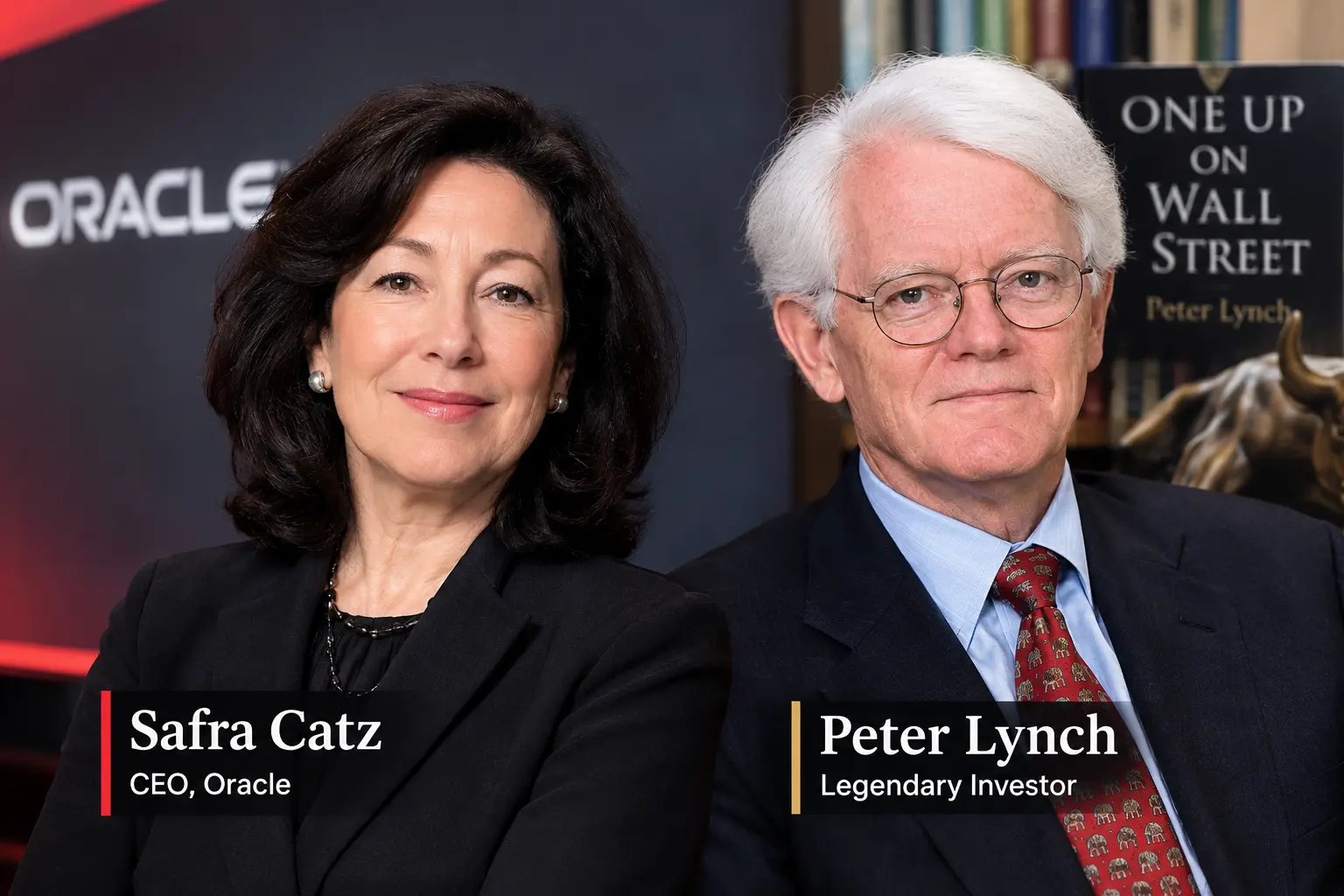
Safra Catz and Peter Lynch: Careers, Achievements, and the Connection Between Two Financial Leaders
Safra Catz and Peter Lynch Financial Leaders
Safra Catz and Peter Lynch are two well-known names in the world of business and finance. Although they built their reputations in different areas, both demonstrate how financial knowledge, strategic thinking, and disciplined decision-making can contribute to long-term professional success. Their names are sometimes searched together by readers who want to understand whether they share a personal, educational, or professional connection.
Safra Catz is best known for her leadership at Oracle, one of the world’s major enterprise technology companies. Her career has included investment banking, corporate finance, acquisitions, and executive management. Peter Lynch, on the other hand, became famous as an investment manager through his work with Fidelity Investments, particularly his leadership of the Magellan Fund. His approach to evaluating businesses and identifying investment opportunities influenced generations of individual investors.
The most clearly documented connection between these two figures is their association with the Wharton School at the University of Pennsylvania. However, their educational timelines and professional careers are different. There is no reliable public evidence establishing that they are relatives, business partners, or former colleagues. Understanding their individual achievements provides a more accurate picture of why their names are interesting to readers exploring finance and corporate leadership.
Who Is Safra Catz?
Safra Catz is an influential business executive who built her career through investment banking and technology leadership. Born in Israel, she moved to the United States during childhood and eventually pursued higher education at the University of Pennsylvania. Her academic background includes an undergraduate degree from the Wharton School in 1983 and a law degree from the University of Pennsylvania in 1986.
Before joining Oracle, Catz worked in investment banking at Donaldson, Lufkin & Jenrette. This experience gave her exposure to corporate transactions, financial analysis, and business strategy. These skills became particularly relevant when she entered the technology sector, where major acquisitions and long-term investment decisions can influence a company’s competitive position.
Catz joined Oracle in 1999 and gradually took on greater responsibilities. She became president in 2004 and later served as co-CEO alongside Mark Hurd before becoming the company’s sole CEO following his death in 2019. In September 2025, Oracle announced a leadership transition that made her executive vice chair of its board while Clay Magouyrk and Mike Sicilia became CEOs. Her career illustrates how financial expertise can develop into broader corporate leadership.
Safra Catz’s Role at Oracle
Oracle provides enterprise software, database technology, cloud infrastructure, and other services used by businesses and organizations around the world. Leading a company of this scale requires more than technical knowledge. Executives must also understand financial performance, customer needs, competition, acquisitions, and the risks associated with large investments.
Catz became particularly associated with Oracle’s financial discipline and corporate transactions. Her investment banking background helped prepare her for evaluating deals, negotiating agreements, and assessing the strategic value of potential acquisitions. Oracle expanded its capabilities through acquisitions over the years, making transaction management an important part of its corporate strategy.
Her leadership also coincided with major changes in the technology industry, especially the growth of cloud computing. Businesses increasingly began moving workloads from traditional on-site systems to cloud-based infrastructure. Oracle invested in developing its cloud offerings to compete in this changing market. Catz’s career demonstrates how an executive must balance established revenue sources with investment in newer opportunities. Although no single leader is responsible for every corporate result, her long tenure at Oracle made her a prominent figure in the company’s strategic development.
Who Is Peter Lynch?
Peter Lynch is an American investor and author widely recognized for managing Fidelity’s Magellan Fund from 1977 to 1990. During this period, he became one of the most celebrated mutual fund managers in the United States. His investment career attracted attention because of the fund’s strong historical performance and his ability to explain complicated financial concepts in accessible language.
Lynch studied at Boston College and later earned an MBA from the Wharton School in 1968. He joined Fidelity Investments in 1969 and gained experience as an analyst before becoming manager of the Magellan Fund. His early career helped him develop a practical approach to evaluating companies, industries, and potential investment opportunities.
After leaving the day-to-day management of Magellan in 1990, Lynch remained an influential voice in investing. He wrote books including One Up on Wall Street and Beating the Street, which explain his approach to researching businesses and making investment decisions. He has also been involved in philanthropic activities. His legacy extends beyond fund management because his writing helped ordinary investors better understand the importance of researching companies rather than relying entirely on market predictions.
Peter Lynch’s Investment Philosophy
One of Lynch’s best-known ideas is that investors should pay attention to businesses they understand. Everyday experiences can sometimes help people notice companies, products, or services worth researching. However, recognizing a popular product is only a starting point. A sensible investment decision also requires examining financial statements, competitive advantages, management quality, valuation, and the company’s ability to grow.
Lynch also emphasized the importance of understanding what a company actually does before buying its stock. Investors can become attracted to exciting industries or rising share prices without considering whether the underlying business justifies its market valuation. His approach encourages investors to investigate the fundamentals and avoid making decisions solely because other people are buying a particular stock.
Another important lesson from Lynch’s career is that successful investing requires patience and independent judgment. Stock prices fluctuate, and even carefully researched investments can perform poorly. His philosophy does not guarantee profits or eliminate financial risk. Instead, it encourages investors to make informed decisions, understand the reasons behind their investments, and avoid reacting emotionally to every market movement.
What Connects Safra Catz and Peter Lynch?
The clearest documented connection between Safra Catz and Peter Lynch is their association with the Wharton School at the University of Pennsylvania. Lynch earned his MBA in 1968, while Catz completed her undergraduate studies at Wharton in 1983 and later earned a law degree from the University of Pennsylvania in 1986. Their academic timelines were separated by approximately 15 years, so they were not classmates.
Beyond this educational connection, their professional histories followed different paths. Lynch’s best-known role involved evaluating companies from an investor’s perspective and managing a mutual fund at Fidelity. Catz built her reputation through investment banking and corporate management, particularly at Oracle. Both worked in environments where financial judgment matters, but their responsibilities were fundamentally different.
There is no reliable public evidence establishing that Catz and Lynch worked together, maintained a business partnership, or had a documented mentor-student relationship. Their shared connection to Wharton should not be treated as proof of a personal relationship. The more useful comparison is how their respective careers demonstrate two sides of financial decision-making: choosing investments in businesses and managing the finances and strategy of a major corporation.
Safra Catz and Peter Lynch: Comparing Their Careers
Although Catz and Lynch both have strong financial backgrounds, their careers offer different lessons. Catz’s work involved helping lead a major corporation, where decisions can affect employees, customers, investors, and long-term business operations. Corporate executives must consider revenue growth, costs, acquisitions, technology investments, and the company’s position in a competitive marketplace.
Lynch’s work involved assessing companies and allocating investment capital. A fund manager must decide which businesses appear attractive at a particular price, how much capital to allocate, and when an investment no longer meets the original expectations. These decisions require research, patience, and an understanding of the relationship between business performance and share prices.
Their careers also demonstrate that financial expertise can be applied in different ways. Corporate leadership focuses on building and managing an organization, while investment management focuses on evaluating opportunities across organizations. Neither path is automatically easier or more successful than the other. Both require analytical ability, sound judgment, and the willingness to make decisions under uncertainty.
Google E-E-A-T Information
| E-E-A-T factor | How to address it in this article |
|---|---|
| Experience | Explain each person’s documented professional background and career milestones. |
| Expertise | Distinguish corporate management from investment management using accurate financial terminology. |
| Authoritativeness | Verify biographies and career details using Oracle, Fidelity, and Wharton records. |
| Trustworthiness | Separate established facts from assumptions and avoid unsupported claims about a personal relationship. |
This table describes how the article can demonstrate useful content practices associated with Google’s E-E-A-T framework. E-E-A-T stands for Experience, Expertise, Authoritativeness, and Trustworthiness. It is a quality framework, not a score or a guarantee of search rankings.
Lessons Readers Can Learn From Both Leaders
One lesson from Catz’s career is the importance of combining financial understanding with strategic thinking. A business cannot rely on revenue growth alone. It must also consider operating costs, customer relationships, competitive pressures, and investment priorities. Her career at Oracle shows how financial experience can support decisions involving large organizations and changing technology markets.
Lynch’s career offers a different lesson: investors should research the businesses they consider buying. A company’s popularity does not automatically make its shares a good investment. Understanding the business model, reviewing financial information, considering the price, and recognizing the risks can help investors make more informed choices.
Together, their careers highlight the value of continuous learning and independent judgment. Neither executive leadership nor investing offers guaranteed success. Markets change, strategies fail, and unexpected events can affect even well-managed businesses. The practical takeaway is to gather reliable information, understand the decision being made, and avoid treating another person’s success as a formula that can be copied without considering individual circumstances.
Safra Catz and Peter Lynch Data
| Detail | Safra Catz | Peter Lynch |
|---|---|---|
| Main field | Corporate leadership and technology | Investment management |
| Education | Wharton undergraduate degree; University of Pennsylvania law degree | Boston College; Wharton MBA |
| Wharton year | 1983 | 1968 |
| Major organization | Oracle | Fidelity Investments |
| Best-known role | Former Oracle CEO; executive vice chair of its board from 2025 | Manager of Fidelity’s Magellan Fund, 1977–1990 |
| Professional focus | Corporate finance, acquisitions, strategy, and operations | Company research, stock selection, and portfolio management |
| Published work | Known primarily for executive leadership | One Up on Wall Street and Beating the Street |
| Documented direct partnership | Not established in reliable public sources | Not established in reliable public sources |
The information in this table summarizes their publicly documented career histories. It does not imply that the two worked together or shared financial assets.
Frequently Asked Questions About Safra Catz and Peter Lynch
Are Safra Catz and Peter Lynch related?
There is no reliable public evidence establishing a family relationship between Safra Catz and Peter Lynch. Their documented biographies describe separate family and professional histories. Their clearest shared connection is their association with the Wharton School at the University of Pennsylvania.
Did Safra Catz and Peter Lynch work together?
No significant professional collaboration between them has been established in reliable public records. Lynch is best known for his work at Fidelity, while Catz built her career at Donaldson, Lufkin & Jenrette and Oracle.
Did Safra Catz and Peter Lynch attend the same university?
Yes. Both attended the Wharton School at the University of Pennsylvania, but in different periods. Lynch earned his MBA in 1968, while Catz graduated from Wharton in 1983 and earned her law degree in 1986.
What is Peter Lynch famous for?
Peter Lynch is best known for managing Fidelity’s Magellan Fund from 1977 to 1990. He also became a widely read investment author whose books explain company research, stock selection, and long-term investing principles.
What is Safra Catz known for?
Safra Catz is known for her long executive career at Oracle, where she held senior leadership roles, including president and CEO. In September 2025, she transitioned from CEO to executive vice chair of Oracle’s board.
What can investors learn from Peter Lynch?
Investors can learn the importance of researching businesses, understanding financial fundamentals, assessing valuations, and making decisions based on evidence rather than market excitement. These principles can improve decision-making, but they cannot guarantee investment returns.
Conclusion
Safra Catz and Peter Lynch represent two influential paths through the world of finance. Catz built her reputation through investment banking and corporate leadership at Oracle, while Lynch became famous for managing Fidelity’s Magellan Fund and explaining investment principles to a broad audience.
Their clearest documented connection is their shared association with Wharton, although they attended the school in different years. There is no reliable public evidence establishing that they are relatives, business partners, or former colleagues. Keeping that distinction clear makes the discussion more accurate and useful.
For readers interested in business and finance, their careers offer complementary lessons. Catz’s experience illustrates the financial discipline and strategic thinking required to lead a major corporation, while Lynch’s work highlights the value of understanding businesses before investing in them. Both stories reinforce the importance of research, informed judgment, and a long-term perspective.