Sinéad O’Connor: Biography, Music Career, Biggest Hits, Personal Life, and Lasting Legacy
Sinéad O’Connor was one of the most distinctive and influential Irish singers of her generation. Known for her powerful voice, emotional performances, fearless personality, and willingness to speak openly about difficult subjects, she became an unforgettable figure in international music. Her artistic journey was not simply about producing popular songs; it was also about expressing personal experiences, challenging social expectations, and standing up for issues she believed deserved public attention.
Born in Dublin, Ireland, O’Connor rose to international fame during the late 1980s and early 1990s. Her unforgettable interpretation of Prince’s song “Nothing Compares 2 U” became a worldwide success and introduced millions of listeners to her extraordinary vocal ability. However, her musical career extended far beyond that famous recording. She explored different genres, released numerous albums, performed traditional Irish music, and built a reputation as an artist who refused to follow conventional industry expectations.
Although Sinéad O’Connor passed away in 2023, her music and influence continue to attract attention. Her story remains important because it combines artistic achievement, personal struggles, cultural conversations, and an unwavering commitment to individuality.
Who Was Sinéad O’Connor?
Sinéad Marie Bernadette O’Connor was an Irish singer-songwriter who became internationally recognized for her emotional singing style and distinctive appearance. She was born on December 8, 1966, in Dublin, Ireland. From an early age, her life included difficult experiences that later influenced her songwriting, artistic identity, and public statements.
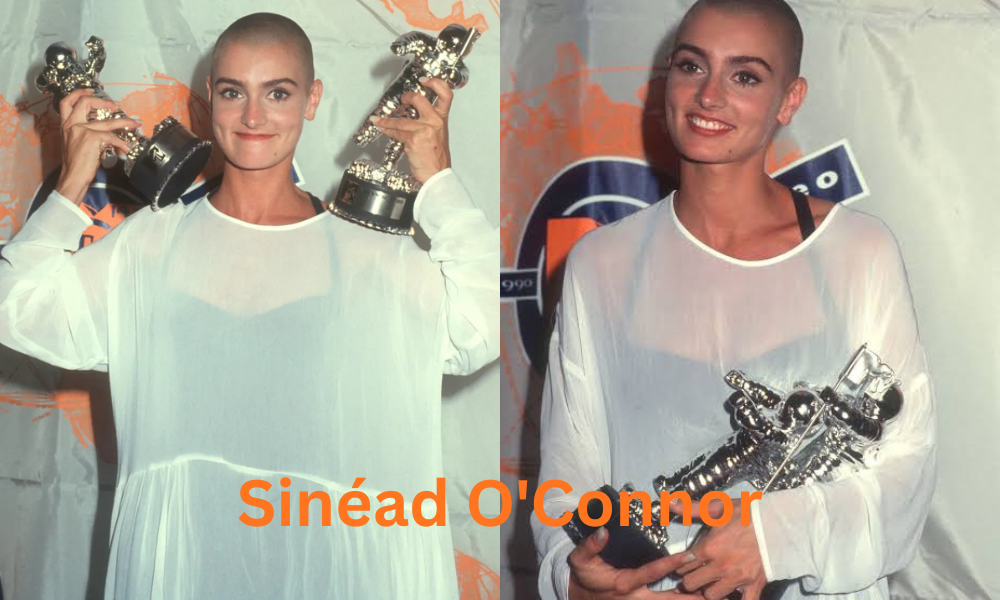
O’Connor became widely recognized for her closely shaved head, expressive eyes, and unconventional approach to music. At a time when the entertainment industry often placed strong expectations on female performers regarding their appearance, she deliberately presented herself differently. Her look became an important part of her identity, but her musical talent was what established her as a respected artist.
Throughout her career, O’Connor released music covering different subjects, including relationships, spirituality, social injustice, family experiences, and emotional pain. She was never interested in limiting herself to one musical category. Her willingness to experiment helped her develop a unique position in the music industry.
Early Life and Family Background
Sinéad O’Connor grew up in Dublin, Ireland, as one of five children. Her parents were John O’Connor and Marie O’Grady. Her childhood was complicated by family difficulties, and her parents separated when she was young. These experiences became an important part of her personal story and influenced some of her later creative work.
During her teenage years, O’Connor experienced several challenges at school and at home. She was eventually sent to Grianán Training Centre, an institution for young girls in Dublin. Her time there was difficult, but music became an important form of expression and an opportunity to develop her creative abilities.
Her interest in music continued to grow as she became older. She eventually began performing and developing the vocal style that would distinguish her from other singers. Rather than following a traditional path into the entertainment business, she gradually built connections within Dublin’s music community.
How Sinéad O’Connor Started Her Music Career
O’Connor’s professional music journey developed during the 1980s. One of her early opportunities came through connections with musicians in Ireland, including people associated with the band In Tua Nua. Her musical potential attracted attention, and she began working toward establishing herself as a professional singer.
In 1984, she helped form the band Ton Ton Macoute after connecting with musician Colm Farrelly through an advertisement in Hot Press magazine. Performing with the group gave her valuable experience and helped introduce her abilities to people working in the music industry.
Her growing reputation eventually led to a recording contract with Ensign Records. This opportunity allowed her to move beyond local performances and begin working on a major album. Her early determination and willingness to take creative risks played an important role in building the foundation of her career.
The Lion and the Cobra: Her Debut Album
In 1987, Sinéad O’Connor released her debut studio album, The Lion and the Cobra. The project introduced audiences to her distinctive voice, experimental musical arrangements, and emotionally powerful songwriting. It immediately established her as an interesting new artist within the alternative music scene.
The album included memorable songs such as “Mandinka,” “Troy,” and “I Want Your (Hands on Me).” These recordings demonstrated her ability to combine alternative rock, pop, and different musical influences. Instead of producing conventional commercial music, she created songs that reflected her personality and artistic independence.
The Lion and the Cobra received strong critical attention and earned a Grammy nomination. It also helped O’Connor develop an international audience before her biggest commercial breakthrough arrived. Looking back, the album remains an important part of her musical legacy because it introduced the creative qualities that defined her career.
Nothing Compares 2 U: The Song That Made Her Famous
One of the most important moments in Sinéad O’Connor’s career came in 1990 when she released “Nothing Compares 2 U.” The song was originally written by Prince and first recorded by his group The Family in 1985. O’Connor later transformed it into an emotionally powerful performance that reached audiences around the world.
Her version appeared on the album I Do Not Want What I Haven’t Got. The recording featured a relatively simple musical arrangement that allowed her voice and emotional delivery to remain at the center of the song. Her performance communicated sadness, loneliness, and heartbreak in a way that connected with listeners across different countries and generations.
The accompanying music video became equally famous. Its close-up presentation focused on O’Connor’s face, allowing viewers to connect directly with the emotions behind the performance. The video became one of the most recognizable music videos of the 1990s and helped turn the song into an international cultural moment.
The success of “Nothing Compares 2 U” also established O’Connor as a major international recording artist. It topped music charts in numerous countries and brought significant attention to her second album. Even decades later, the recording remains the song most closely associated with her name.
Albums and Musical Achievements
Although “Nothing Compares 2 U” became her best-known recording, O’Connor created a much larger musical catalogue. Her second album, I Do Not Want What I Haven’t Got, released in 1990, became one of the most successful projects of her career. It demonstrated her ability to combine commercial appeal with deeply personal artistic expression.
She continued exploring different musical styles through albums such as Am I Not Your Girl? (1992), Universal Mother (1994), Faith and Courage (2000), and Sean-Nós Nua (2002). Each release showed a different side of her personality and musical interests. Some projects focused on alternative pop and rock, while others explored traditional Irish music and reggae influences.
Her later albums included Throw Down Your Arms (2005), Theology (2007), How About I Be Me (And You Be You)? (2012), and I’m Not Bossy, I’m the Boss (2014). These releases demonstrated that she remained creatively active and interested in developing her sound throughout different stages of her life.
Her achievements were also recognized by the music industry. According to the Recording Academy, O’Connor received eight Grammy nominations and won the award for Best Alternative Music Performance for I Do Not Want What I Haven’t Got at the 1991 Grammy Awards.
Sinéad O’Connor’s Activism and Controversies
Sinéad O’Connor was not only a singer but also a public figure who regularly expressed strong opinions about social and political issues. She spoke about subjects that many entertainers preferred to avoid, including child protection, institutional abuse, women’s rights, racism, and religious authority.
One of the most controversial moments of her career occurred during her 1992 appearance on Saturday Night Live. During the performance, she tore up a photograph of Pope John Paul II while making a statement about child abuse within the Catholic Church. The action generated widespread criticism and damaged her relationship with parts of the entertainment industry.
However, O’Connor continued explaining the reasons behind her protest. She believed that serious institutional problems deserved attention, even when discussing them created public controversy. Years later, the wider international conversation about abuse within religious institutions made the subject of her protest especially significant.
Her activism demonstrated that she considered music and public influence important ways to communicate her beliefs. Whether people agreed with her approach or not, she remained committed to expressing her views rather than changing them simply to maintain popularity.
Personal Life, Relationships, and Children
Sinéad O’Connor’s personal life attracted considerable public interest throughout her career. She experienced several relationships and marriages, while also balancing the responsibilities of motherhood with the demands of working in the music industry. Despite her international recognition, she often spoke about the importance of family and personal experiences.
She had four children: Jake, Róisín, Shane, and Yeshua. Her children were an important part of her life, although family circumstances were sometimes complicated. She also experienced difficult personal periods that influenced her public appearances and professional activities.
In January 2022, her son Shane died at the age of 17. This was an extremely painful loss for O’Connor, and she publicly expressed her grief. Following this tragedy, she reduced her public activities and eventually stepped away from several planned performances.
Her personal experiences should be understood with sensitivity. O’Connor’s life involved both extraordinary artistic accomplishments and deeply challenging moments. Her story is a reminder that public recognition does not mean a person is free from private difficulties.
Religious Beliefs and Spiritual Journey
Religion and spirituality were recurring subjects throughout Sinéad O’Connor’s life and music. She frequently discussed her beliefs and questioned religious institutions, particularly when she felt they were responsible for injustice or harm. Her interest in spirituality developed over several decades and influenced both her personal identity and artistic expression.
In 1999, she was ordained as a priest within a dissident Catholic group. This unusual decision attracted media attention and reflected her continuing interest in religious traditions outside conventional institutional structures.
In 2018, O’Connor announced that she had converted to Islam and adopted the name Shuhada’ Sadaqat. She spoke positively about her new religious identity and continued exploring spirituality in her personal life.
Her religious journey was individual and complex. Rather than remaining attached to one public identity throughout her life, she continued questioning, learning, and making personal decisions based on her evolving beliefs.
Sinéad O’Connor’s Final Years and Death
During the later years of her life, O’Connor continued to receive recognition for her contribution to music. Her 2021 memoir, Rememberings, offered readers a personal account of her experiences, career, creative process, and relationships. The book received attention for its honesty and distinctive storytelling.
In 2022, the documentary Nothing Compares explored her life, musical achievements, and public activism. It introduced her story to new audiences while revisiting the cultural impact of her career during the late 1980s and early 1990s.
In March 2023, she received the Irish Classic Album award for I Do Not Want What I Haven’t Got at the RTÉ Choice Music Prize event. This recognition highlighted the lasting importance of her music and its place in Irish cultural history.
Sinéad O’Connor died on July 26, 2023, in London, England, at the age of 56. In January 2024, a coroner confirmed that her death was due to natural causes. Her passing prompted tributes from musicians, political leaders, fans, and people who had been influenced by her work.
Sinéad O’Connor’s Legacy and Influence on Music
Sinéad O’Connor left behind a musical legacy that extends far beyond one successful single. Her powerful voice, creative independence, and willingness to explore difficult subjects helped establish her as an influential figure in alternative music. She showed that a performer could achieve international recognition without completely adapting to the expectations of the entertainment industry.
Her influence can be seen in the broader tradition of female singer-songwriters who use music to express personal experiences and challenge social expectations. She demonstrated that vulnerability could become a source of artistic strength and that musicians could use their platforms to raise important questions.
Her work also continues to attract listeners through streaming platforms, documentaries, interviews, and retrospective music discussions. New generations can discover her recordings and understand why her performances remain so memorable.
Ultimately, Sinéad O’Connor was an artist who followed her own direction. Her career included commercial success, experimentation, public controversy, and personal challenges. Although her life ended in 2023, her music continues to remind audiences of the power of honesty, individuality, and artistic expression.
Google E-E-A-T Information Table
| E-E-A-T Factor | Information |
|---|---|
| Experience | Covers Sinéad O’Connor’s music career, albums, performances, and personal journey. |
| Expertise | Provides organized biographical information and music industry context. |
| Authoritativeness | Uses recognized music and biographical reference sources to support important details. |
| Trustworthiness | Includes established dates, verified career achievements, and factual information without presenting speculation as fact. |
Sinéad O’Connor Biography and Career Data
| Category | Details |
|---|---|
| Full Name | Sinéad Marie Bernadette O’Connor |
| Date of Birth | December 8, 1966 |
| Birthplace | Dublin, Ireland |
| Nationality | Irish |
| Profession | Singer, Songwriter, Musician |
| Famous For | Nothing Compares 2 U |
| Music Genres | Alternative Rock, Pop, Reggae, Folk |
| Debut Album | The Lion and the Cobra (1987) |
| Breakthrough Album | I Do Not Want What I Haven’t Got (1990) |
| Grammy Awards | 1 Win |
| Grammy Nominations | 8 |
| Memoir | Rememberings (2021) |
| Documentary | Nothing Compares (2022) |
| Children | Jake, Róisín, Shane, and Yeshua |
| Date of Death | July 26, 2023 |
| Age at Death | 56 Years |
| Place of Death | London, England |
Frequently Asked Questions About Sinéad O’Connor
1. Who was Sinéad O’Connor?
Sinéad O’Connor was an Irish singer-songwriter known for her powerful voice, alternative music, emotional performances, and outspoken activism. She became internationally famous through her 1990 recording of “Nothing Compares 2 U.”
2. When was Sinéad O’Connor born?
She was born on December 8, 1966, in Dublin, Ireland.
3. What was Sinéad O’Connor’s most famous song?
Her most famous song was “Nothing Compares 2 U,” originally written by Prince. Her 1990 recording became an international hit.
4. How many Grammy Awards did Sinéad O’Connor win?
She won one Grammy Award and received eight nominations during her career.
5. What albums did Sinéad O’Connor release?
Some of her best-known albums include The Lion and the Cobra, I Do Not Want What I Haven’t Got, Universal Mother, Faith and Courage, Throw Down Your Arms, and I’m Not Bossy, I’m the Boss.
6. Was Sinéad O’Connor married?
Yes. She was married four times during her life, including marriages to John Reynolds, Nick Sommerlad, Steve Cooney, and Barry Herridge.
7. When did Sinéad O’Connor die?
Sinéad O’Connor died on July 26, 2023, in London, England. She was 56 years old.
Conclusion
Sinéad O’Connor was much more than a successful recording artist. She was a talented singer, songwriter, activist, and independent thinker who built a career around her own creative vision. From her early beginnings in Dublin to international success with “Nothing Compares 2 U,” she made a lasting contribution to music and popular culture.
Her willingness to speak about difficult subjects, experiment with different musical styles, and challenge established expectations made her one of the most distinctive performers of her generation. Although she is no longer alive, her recordings, artistic achievements, and influence continue to be remembered by music lovers around the world.
Sinéad O’Connor’s story remains an important part of modern music history, and her voice continues to reach audiences long after her final performance.