
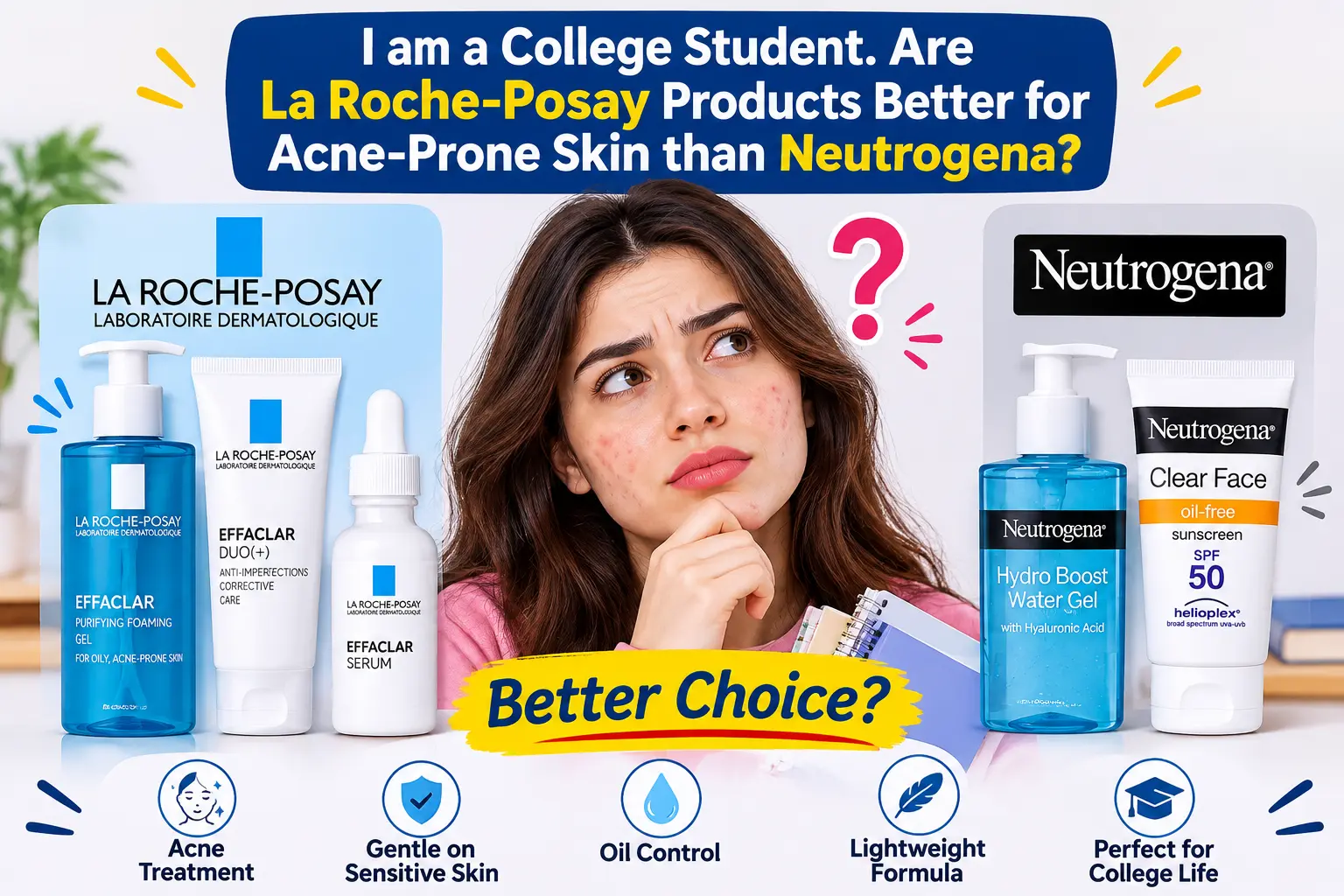
i am a college student. are la roche-posay products better for acne-prone skin than neutrogena?
i am a college student. are la roche-posay products better for acne-prone skin than neutrogena? College life can be exciting, but dealing with acne while balancing classes, assignments, exams, and a limited budget can be frustrating. Finding the right skincare products is not always easy, especially when popular brands such as La Roche-Posay and Neutrogena offer so many different cleansers, moisturizers, and acne treatments. Both brands have products designed for acne-prone skin, but choosing between them depends on your skin type, the ingredients you need, and how much you want to spend.
If you are a college student wondering whether La Roche-Posay products are better for acne-prone skin than Neutrogena, the short answer is that neither brand is automatically better for everyone. La Roche-Posay is known for its skincare products aimed at sensitive skin and its targeted acne-care ranges, while Neutrogena offers a broad selection of affordable products, including treatments containing ingredients that help fight acne.
In this guide, we will compare both brands, explore their key ingredients, discuss their advantages and disadvantages, and explain how students can build a simple skincare routine without spending too much money.
Quick Data Comparison
| Feature | La Roche-Posay | Neutrogena |
|---|---|---|
| Best-known advantage | Targeted skincare for sensitive and acne-prone skin | Affordable and accessible skincare options |
| Acne treatment options | Products with salicylic acid and other acne-care ingredients, depending on the product | Products with salicylic acid and benzoyl peroxide, depending on the product |
| Sensitive skin options | Offers products specifically formulated for sensitive skin | Offers gentle and fragrance-free options in selected ranges |
| Price level | Generally mid-range to premium | Generally budget-friendly to mid-range |
| Best for college students | Students prioritizing targeted skincare and tolerability | Students seeking accessible, cost-conscious acne care |
| Main consideration | Higher prices for some products | Formulas vary, and some products may cause dryness or irritation |
| Overall verdict | Worth considering for a carefully selected routine | An excellent starting point for budget-conscious skincare |
Note: Formulations, prices, and product availability vary by country. Always check the ingredient list and the label of the specific product you plan to purchase.
Google E-E-A-T Information
| E-E-A-T Factor | How This Article Addresses It |
|---|---|
| Experience | Discusses practical skincare considerations relevant to college students, including budget, convenience, and daily routines. |
| Expertise | Explains common acne-fighting ingredients and how they may work for different skin types. |
| Authoritativeness | Uses established dermatological skincare principles and encourages readers to consult qualified dermatology professionals when needed. |
| Trustworthiness | Avoids claiming that one brand is universally superior and acknowledges that individual results vary. |
Editorial note: This table describes the article’s approach to E-E-A-T. It does not represent a Google endorsement, certification, or ranking guarantee.
1. Understanding La Roche-Posay and Neutrogena
Before deciding which brand is better for acne-prone skin, it helps to understand what each company offers. Both brands manufacture skincare products for different concerns, but their product ranges, prices, and individual formulations are not identical. Comparing the actual products is more useful than judging a brand by its reputation alone.
What Makes La Roche-Posay Popular?
La Roche-Posay is a skincare brand known for developing products for a range of skin concerns, including sensitivity, dryness, and acne. Its Effaclar range is particularly associated with oily and acne-prone skin. Depending on the market and product, this range includes cleansers, moisturizers, and targeted treatments intended to help manage breakouts and excess oil.
One reason people consider La Roche-Posay is its emphasis on skin tolerability. Acne treatments can cause dryness, redness, or irritation, especially when someone uses several active ingredients together. Choosing products that suit sensitive skin may help people maintain a consistent routine without making their skin feel uncomfortable.
However, a higher price does not automatically mean a product will produce better results. Some La Roche-Posay products may be useful for people who struggle with both acne and sensitivity, but the exact formulation matters more than the brand name. Students should compare ingredients and consider whether the additional cost is justified for their particular needs.
Why Is Neutrogena a Popular Choice?
Neutrogena is widely recognized for offering skincare products at different price points. Its acne-care selection includes products containing ingredients such as salicylic acid and benzoyl peroxide, depending on the formulation and local availability. These ingredients have different roles in acne treatment, making it important to select the right product for your main concern.
For students who are managing tuition fees, transportation, food, and other daily expenses, affordability can make a significant difference. A suitable Neutrogena cleanser or acne treatment may provide a practical starting point without requiring a large skincare budget. Its availability can also make it easier to replace a product when it runs out.
Still, affordable skincare is not automatically gentle skincare. Some acne treatments can cause irritation, particularly when used too frequently or combined with other strong products. Neutrogena offers different formulas, so students should look beyond the price and check whether a particular product suits their skin.
Which Brand Has the Better Reputation for Acne?
Both brands have established skincare ranges, but reputation alone cannot predict how your skin will respond. Acne is influenced by several factors, including excess oil, clogged pores, inflammation, hormones, and genetics. A product that works well for one student may be less effective or more irritating for another.
La Roche-Posay may appeal to students looking for products specifically positioned around acne-prone and sensitive skin. Neutrogena may be more attractive to those seeking accessible products with recognized acne-fighting ingredients. Neither advantage guarantees that every product from that brand will work for every person.
The smartest approach is to identify your primary skin concern first. If your main problem is clogged pores, an appropriate salicylic acid product may be worth considering. If you have inflamed pimples, benzoyl peroxide may be a more relevant option. If your skin is easily irritated, gentle cleansing and a well-tolerated moisturizer should be priorities regardless of brand.
2. La Roche-Posay vs. Neutrogena: Comparing Acne-Fighting Ingredients
The ingredients in a skincare product are often more important than the brand itself. Some ingredients help remove excess oil and unclog pores, while others target acne-causing bacteria or support the skin barrier. Understanding these differences can help college students make more informed choices.
Salicylic Acid for Blackheads and Clogged Pores
Salicylic acid is a common ingredient in acne skincare products from both brands. It helps exfoliate the skin and unclog pores, making it particularly useful for blackheads, whiteheads, and certain types of mild acne. La Roche-Posay offers salicylic acid products in its Effaclar range, while Neutrogena also has several acne treatments featuring this ingredient.
For students who notice small bumps across their forehead, an oily nose, or frequent blackheads, a suitable salicylic acid product may be a reasonable option. However, using it too frequently can lead to dryness, peeling, or irritation, especially if your skin is naturally sensitive.
Start with one salicylic acid product and follow its label instructions. You do not need to purchase an entire range from either company to get started. A single well-chosen treatment, combined with a gentle cleanser and moisturizer, may be enough for a basic routine.
Benzoyl Peroxide for Inflamed Pimples
Benzoyl peroxide is another established acne-fighting ingredient. It helps reduce acne-causing bacteria and is commonly used to treat inflamed pimples. Both La Roche-Posay and Neutrogena offer products containing benzoyl peroxide, although availability and concentrations differ between products and countries.
If you frequently develop red pimples rather than mostly blackheads, a benzoyl peroxide product may be worth considering. The American Academy of Dermatology notes that starting with a lower concentration, such as 2.5%, can help reduce the risk of irritation while treating mild pimples. Always check the product label because not every formula is available in every market.
American Academy of Dermatology
One important detail is that benzoyl peroxide can bleach towels, pillowcases, and clothing. Students living in shared accommodation or university hostels should be particularly careful when using it. Follow the instructions for your specific product, and avoid combining multiple strong acne treatments without professional guidance.
Moisturizing Ingredients and Skin Barrier Support
Acne-prone skin still needs moisture. In fact, using strong acne treatments without adequate moisturizing can leave the skin dry, uncomfortable, and more difficult to manage. A suitable moisturizer helps maintain the skin barrier and can make an acne treatment routine easier to tolerate.
American Academy of Dermatology La Roche-Posay offers moisturizing products designed for different skin types, including oily and sensitive skin. Neutrogena also sells lightweight moisturizers and selected products formulated for acne-prone skin. The best option depends on the individual formula, rather than the company’s overall reputation.
Look for a moisturizer labeled non-comedogenic, meaning it is formulated to be less likely to clog pores. If your skin feels tight after washing, avoid responding by using a stronger cleanser. A gentler cleanser and consistent moisturizing may be a better approach.
3. Which Brand Is Better for Different Skin Types?
There is no single skincare routine that works for every student. Two people with acne may have very different skin types, so identifying your own needs is an important step before purchasing products.
For Oily and Acne-Prone Skin
If your face becomes shiny within a few hours of washing, you may have oily skin. Excess oil can contribute to clogged pores, although oiliness alone does not determine whether you will develop acne. Both brands offer products intended for oily skin.
La Roche-Posay’s Effaclar range includes products marketed for oily and acne-prone skin, including cleansers and treatments. Neutrogena offers oil-free products and a range of acne treatments, which may suit students who prefer a simpler, lower-cost routine.
For this skin type, choose a cleanser that removes excess oil without leaving your face feeling stripped. You do not need to eliminate every trace of oil to have healthy skin. Overwashing and aggressive scrubbing can cause irritation and make your routine harder to maintain.
For Sensitive and Easily Irritated Skin
Sensitive skin may react to fragrances, harsh cleansers, exfoliating ingredients, or certain acne treatments. If your face frequently becomes red, itchy, or uncomfortable after applying skincare products, choosing a gentle formula should be a priority.
La Roche-Posay has products specifically marketed for sensitive skin, including options within its broader skincare range. Neutrogena also offers selected gentle and fragrance-free formulas. However, neither brand can guarantee that every product will suit every sensitive-skinned person.
Introduce only one new active product at a time, and patch-test it according to the product instructions. If irritation persists, discontinue the product. Persistent burning, swelling, or a significant rash deserves medical advice rather than another skincare purchase.
For Dry Skin With Acne
Having dry skin does not mean you cannot develop acne. Some students experience flaky cheeks alongside breakouts around the chin, forehead, or jawline. In this situation, using several oil-control products at once may make the dryness worse.
A gentle cleanser and a moisturizer that supports the skin barrier should form the foundation of your routine. You can then consider adding one acne treatment appropriate for your symptoms. Both brands have products that may fit into this type of routine, depending on their ingredients and texture.
If your skin becomes increasingly dry or starts peeling after beginning acne treatment, reduce use according to the product instructions or seek advice from a pharmacist or dermatologist. Avoid using scrubs to remove flakes because this can aggravate irritation.
4. Which Brand Is More Affordable for College Students?
Budget is an important consideration for students. Skincare should be manageable alongside education expenses, and there is no need to spend a large amount of money to build a sensible routine.
Neutrogena for a Budget-Friendly Routine
Neutrogena is often a practical starting point for students who want to explore acne-care products without committing to a premium-priced routine. Its product range includes cleansers, targeted treatments, and moisturizers at different price points. The actual cost depends on the product, retailer, and country.
A basic routine does not need to contain a cleanser, toner, exfoliating serum, face mask, spot treatment, and several moisturizers. Buying too many products can increase costs and make it harder to identify which ingredient is helping or irritating your skin.
Instead, prioritize the essentials: a gentle cleanser, an appropriate acne treatment if needed, a moisturizer, and sunscreen. This approach can be more economical than purchasing a complete branded skincare set.
Is La Roche-Posay Worth the Extra Cost?
La Roche-Posay may be worth considering if you find a particular product that suits your skin better than a cheaper alternative. Its Effaclar range includes several acne-care options, but some products can be relatively expensive compared with basic skincare alternatives.
The key question is whether a specific product offers a meaningful benefit for your needs. For example, if a moisturizer from one brand keeps your skin comfortable without triggering breakouts, that may be more valuable than purchasing a complete routine from another brand simply because it is popular.
For students in Pakistan, imported skincare products may also vary considerably in price and availability. Check the final price, ingredient list, expiration date, and seller reliability before buying. A genuine, affordable product that you can use consistently is often a better choice than an expensive routine you cannot maintain.
5. How College Students Can Build a Simple Acne Skincare Routine
A good routine should be easy enough to follow during early lectures, exam weeks, and late-night study sessions. Consistency matters more than having a large collection of products.
Morning Skincare Routine
Start your morning by washing your face with a gentle cleanser suitable for your skin type. If your skin is dry or easily irritated, avoid unnecessarily harsh cleansing. Students with very oily skin may prefer a gentle foaming cleanser.
Next, apply a lightweight moisturizer if your skin needs it. Even oily skin can benefit from moisturizing, particularly when acne treatments cause dryness. Choose a product that feels comfortable and is labeled non-comedogenic where possible.
Finish with a broad-spectrum sunscreen with SPF 30 or higher. Sun protection is important for reducing sun damage and helping prevent post-acne marks from becoming more noticeable. Select a formula you can comfortably wear every day.
Evening Skincare Routine
At night, wash away sunscreen, sweat, oil, and daily dirt using a gentle cleanser. Avoid scrubbing your face aggressively or washing repeatedly throughout the evening. A simple routine is easier to maintain and less likely to irritate your skin.
If you are using an acne treatment, apply it according to the instructions on its packaging. Do not introduce several new active ingredients at once. Combining multiple exfoliating acids, strong cleansers, and acne treatments can increase irritation without necessarily improving your results.
Apply moisturizer after cleansing and treatment as directed. If your skin becomes persistently irritated, stop the product that appears to be causing the reaction and seek advice if necessary. Deep, painful acne or acne that leaves scars may require a dermatologist’s treatment plan rather than over-the-counter skincare alone.
6. Common Skincare Mistakes College Students Should Avoid
One common mistake is changing products too quickly. Students may try a cleanser for a few days, see no immediate improvement, and switch to another brand. Acne treatments often need several weeks to show meaningful improvement, so frequent changes can make it difficult to judge whether a product is working.
Another mistake is using too many active ingredients together. For example, applying a salicylic acid treatment, a benzoyl peroxide product, and an exfoliating serum in the same routine may be irritating, especially for beginners. Start with one treatment, follow its directions, and introduce additional products cautiously.
Finally, avoid squeezing pimples or using harsh homemade remedies. Picking at acne can increase inflammation and the risk of scarring. Toothpaste, abrasive scrubs, and other unproven remedies are not substitutes for evidence-based acne care. If your acne is severe, painful, or affecting your confidence, professional help can make a real difference.
7. La Roche-Posay vs. Neutrogena: Final Verdict
So, are La Roche-Posay products better for acne-prone skin than Neutrogena? The answer depends on your skin type, your main acne concern, and your budget.
La Roche-Posay is a strong option for students who want to explore its targeted Effaclar products or need a particular formula that suits their sensitive, oily, or acne-prone skin. Neutrogena is an equally reasonable option for students looking for accessible acne-care products and established ingredients at a range of price points.
Neither brand guarantees clear skin, and more expensive products are not necessarily more effective. What matters most is choosing a suitable active ingredient, protecting your skin barrier, using sunscreen, and following a routine consistently. Give a suitable acne treatment enough time to work, while paying attention to irritation and other unwanted reactions.
The bottom line: If you are a college student on a tight budget, start by comparing individual Neutrogena and La Roche-Posay products with similar ingredients. Choose the one that fits your skin and budget, rather than assuming that an entire brand is automatically superior.
Frequently Asked Questions (FAQs)
1. Is La Roche-Posay better than Neutrogena for acne?
Not necessarily. La Roche-Posay offers targeted acne-care products, while Neutrogena has a broad range of affordable acne treatments. The better choice depends on the specific formulation, your skin type, and how well you tolerate the product.
2. Which brand is better for sensitive, acne-prone skin?
Either brand may work, depending on the product. Compare fragrance, active ingredients, and other formulation details. Start slowly with acne treatments and discontinue a product if it causes persistent irritation.
3. Is Neutrogena good for college students on a budget?
Yes. Neutrogena offers products at different price points, making it a practical option for students who want to establish a basic skincare routine. Prices and availability vary by location.
4. How long does acne skincare take to work?
Many acne treatments require several weeks to show noticeable improvement. The exact timeframe depends on the ingredient, the severity of acne, and how consistently the product is used. If acne is worsening or causing scars, consult a dermatologist instead of waiting indefinitely.
5. Can I use La Roche-Posay and Neutrogena together?
Yes, selected products from both brands can be used in the same routine. However, check their active ingredients to avoid unnecessary duplication. For example, using multiple exfoliating treatments together may increase dryness and irritation.
6. What is the best first step for a student with acne?
Begin with a gentle cleanser, a suitable moisturizer, and daily sunscreen. If you need additional acne treatment, choose one evidence-based active ingredient that matches your main concern and follow the product instructions. Seek professional advice if your acne is severe, painful, persistent, or scarring.