
Muck Rack: Complete Guide to the Media Monitoring and PR Platform
If you work in public relations, journalism, communications, or digital marketing, you may have come across the term Muck Rack. It is a professional platform designed to help PR teams, communications professionals, marketers, and journalists manage media relationships, discover relevant coverage, and keep track of what is being published across the media landscape.
At first glance, Muck Rack can look like another media database or monitoring tool. In reality, it combines several functions into one platform. Depending on how it is used, professionals can use Muck Rack to find journalists, research media outlets, monitor news coverage, organize contacts, and measure the impact of public relations campaigns.
The platform is especially useful for organizations that need to understand how their brand, executives, products, or campaigns are being discussed in the media. Instead of manually searching hundreds of websites every day, communications teams can use tools like Muck Rack to organize this information in a more practical way.
What Is Muck Rack?
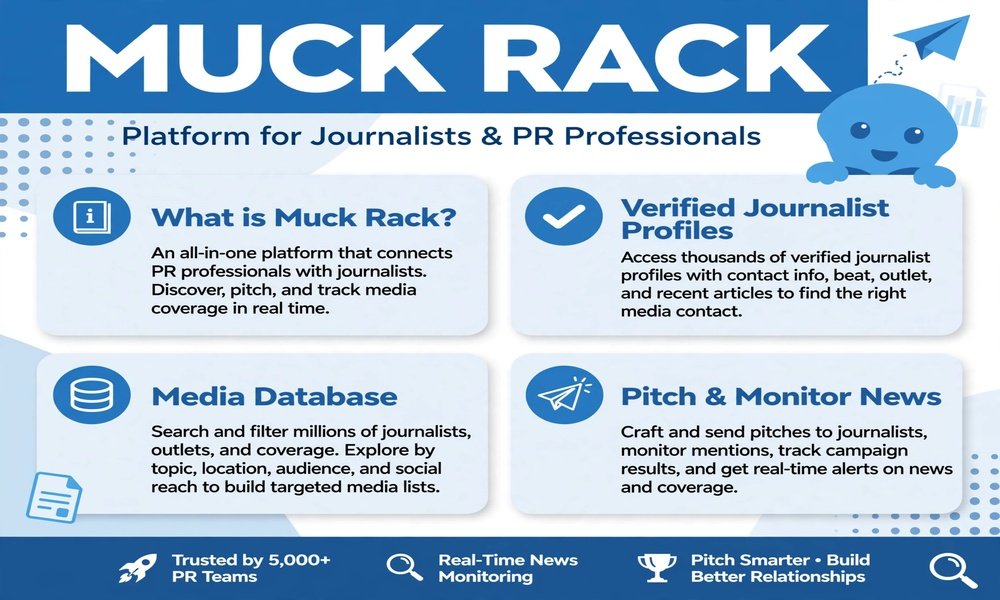
Muck Rack is a media intelligence and public relations platform used by PR and communications professionals. Its tools are focused on areas such as media monitoring, journalist research, media relations, and reporting. The platform brings different types of media-related information into one workspace so that teams can spend less time searching and more time working on communication strategies.
One of the best-known uses of Muck Rack is journalist discovery. PR professionals often need to identify reporters who cover specific industries, topics, companies, or locations. Muck Rack provides a searchable database that can help users find relevant journalists and understand the subjects they regularly write about.
Muck Rack is also designed for monitoring media coverage. Organizations can track mentions of their company, brand, competitors, executives, or other keywords. This can make it easier to identify new articles, understand media attention, and respond to important developments.
How Does Muck Rack Work?
Muck Rack works by bringing together media information and organizing it into a searchable platform. Users can search for journalists, publications, topics, and media coverage instead of manually checking individual websites. This is particularly useful for PR teams that have to monitor large amounts of information.
For example, imagine a technology company launching a new product. Its communications team may want to know which journalists cover the technology industry, which reporters have written about similar products, and where the company’s name appears online after the launch. A platform like Muck Rack can help organize these tasks.
The platform can also help teams monitor changes over time. Rather than looking at one article in isolation, professionals can analyze broader media activity and identify patterns. This can be useful when preparing reports for managers, executives, clients, or other stakeholders.
Muck Rack for Finding Journalists
Finding the right journalist is one of the most important parts of media relations. Sending the same press release to hundreds of unrelated reporters rarely produces good results. A better approach is to identify journalists whose coverage is genuinely relevant to the story.
Muck Rack can help users search for journalists based on topics, publications, and areas of coverage. A PR professional working for a healthcare company, for example, may search for reporters who regularly cover healthcare, medicine, technology, or related subjects.
Another useful aspect is researching a journalist’s previous work. Before contacting a reporter, a PR professional can review the topics they have covered and determine whether the proposed story fits their interests. This can make outreach more targeted and potentially more useful for both sides.
Muck Rack for Media Monitoring
Media monitoring is another major part of modern public relations. Companies need to know when they are mentioned in news articles, blogs, digital publications, and other media sources. Missing an important article can sometimes mean missing an opportunity to respond or engage.
Muck Rack’s monitoring capabilities can help organizations keep track of relevant coverage. Users can monitor keywords and follow mentions related to their organization, competitors, executives, products, or campaigns.
This information can also be useful during a crisis. If a company suddenly receives significant media attention, communications professionals need to understand what is being reported and how the story is developing. Monitoring tools can help teams collect relevant coverage and make faster decisions.
Muck Rack and Public Relations
Public relations is no longer limited to sending press releases. Modern PR involves relationship building, media research, monitoring, reporting, content strategy, and reputation management. Muck Rack is designed around many of these activities.
A PR team can use media research before a campaign, journalist discovery during outreach, and monitoring after a story is published. This creates a more connected workflow than using completely separate tools for every task.
The platform can also help PR professionals demonstrate the value of their work. Instead of simply saying that a campaign generated media attention, teams can collect coverage and analyze results. This can make PR reporting more meaningful for executives and clients.
Muck Rack for Businesses and Marketing Teams
Muck Rack is not only relevant to traditional PR agencies. Businesses with internal communications or marketing departments can also benefit from media intelligence tools. Companies often need to understand their position in the market and how competitors are being discussed.
For marketing teams, media coverage can provide useful information about brand visibility. If a company launches a product and receives coverage from several relevant publications, the team can monitor that activity and use it as part of its broader communications analysis.
Businesses can also use media research to identify industry trends. Looking at what journalists are discussing can help organizations understand which subjects are receiving attention and where there may be opportunities to contribute expert commentary.
Muck Rack for PR Agencies
PR agencies often manage multiple clients at the same time. That makes organization particularly important. A platform that combines journalist research, monitoring, and reporting can help agencies keep information organized across different campaigns.
For an agency, journalist research can be part of the initial campaign planning process. The team can identify relevant media contacts, study their recent work, and develop outreach strategies based on the client’s story.
After outreach and coverage begin, monitoring tools can help the agency collect results. This information can then be used in client reports to show media activity and campaign performance. Having these functions connected can make agency workflows more efficient.
Benefits of Using Muck Rack
One major benefit of Muck Rack is convenience. Instead of searching many different websites manually, professionals can use a centralized platform for several media-related tasks. This can save time, particularly for teams working with large numbers of contacts and media mentions.
Another benefit is better media targeting. PR professionals can research journalists before contacting them, which may help reduce irrelevant pitches. More targeted outreach can also contribute to stronger relationships between PR teams and journalists.
A third benefit is reporting. Media coverage can be difficult to organize when information comes from many different sources. A structured platform can help teams collect coverage and turn media activity into reports that are easier to understand.
Potential Limitations of Muck Rack
Although Muck Rack can be useful, it is not a replacement for good PR strategy. Having access to a large media database does not automatically mean that a campaign will receive coverage. The quality of the story, relevance of the pitch, timing, and relationship with journalists still matter.
Cost can also be an important consideration. Professional media intelligence platforms are generally designed for businesses and professional teams rather than casual users. Organizations should evaluate their actual needs before deciding whether a paid platform makes financial sense.
Another consideration is data accuracy. Journalists can change publications, beats, job titles, or areas of interest. No media database should be treated as a perfect source of information. PR professionals should still verify important details before sending outreach.
Muck Rack vs. a Traditional Media List
A traditional media list may consist of spreadsheets containing journalist names, publications, email addresses, and notes. While spreadsheets can work for smaller campaigns, they can become difficult to maintain as a PR operation grows.
Muck Rack provides a more dynamic approach because it is designed specifically around media relationships and monitoring. Instead of simply storing contact information, professionals can research journalists and track media activity in a more structured environment.
However, a spreadsheet can still be perfectly adequate for a small business or a limited campaign. The best solution depends on the organization’s size, budget, workflow, and media relations requirements.
How PR Professionals Can Get Better Results
Using Muck Rack effectively requires more than simply searching for journalists. The quality of the research matters. Before contacting a reporter, professionals should understand the journalist’s beat, recent articles, publication, and likely interest in the story.
PR teams should also avoid sending generic pitches to every journalist they can find. A short, relevant, personalized pitch is generally more useful than a long message that has little connection to the reporter’s work.
Monitoring should also be treated as an ongoing activity rather than something that happens only during a campaign. Regular monitoring can help organizations identify emerging conversations, potential risks, and opportunities for expert commentary.
Google E-E-A-T for Muck Rack
| E-E-A-T Factor | How It Applies to Muck Rack |
|---|---|
| Experience | PR and communications teams can use media research, journalist discovery, and monitoring workflows in practical campaigns. |
| Expertise | The platform is focused on professional media relations, communications, and media intelligence. |
| Authoritativeness | Muck Rack is recognized within the PR and communications technology space as a professional media-relations platform. |
| Trustworthiness | Users should still verify journalist information and important media details before making outreach decisions. |
Muck Rack Data
| Data Point | Details |
|---|---|
| Platform Name | Muck Rack |
| Main Category | PR and Media Intelligence |
| Primary Users | PR professionals, communications teams, marketers, and agencies |
| Journalist Research | Yes |
| Media Monitoring | Yes |
| Media Relations | Yes |
| PR Reporting | Yes |
| Competitor Monitoring | Available through media intelligence workflows |
| Main Purpose | Managing media relationships and monitoring media coverage |
| Best For | Professional PR and communications teams |
Is Muck Rack Worth Using?
Whether Muck Rack is worth using depends on what an organization needs. For a professional PR team that regularly researches journalists, monitors coverage, and prepares media reports, a dedicated platform can provide considerable value.
For a small website owner who only occasionally contacts one or two journalists, a large professional platform may not be necessary. Free search tools, publication websites, and carefully maintained contact lists may be enough for basic outreach.
The most important question is therefore not simply whether Muck Rack is a good platform. The better question is whether its tools match the organization’s media relations workflow and justify the investment.
Final Thoughts on Muck Rack
Muck Rack is a professional platform built around modern public relations and media intelligence. Its combination of journalist research, media monitoring, media relations, and reporting makes it useful for organizations that need a structured way to manage their interactions with the media.
Its biggest advantage is organization. PR professionals can research relevant journalists, monitor coverage, and collect media information without relying entirely on disconnected spreadsheets and manual searches.
At the same time, technology cannot replace strong communication skills. Successful PR still depends on having a valuable story, understanding the audience, choosing the right journalist, and building genuine media relationships. Used as part of a thoughtful PR strategy, Muck Rack can be a useful tool for turning media research and monitoring into a more organized and measurable process.